
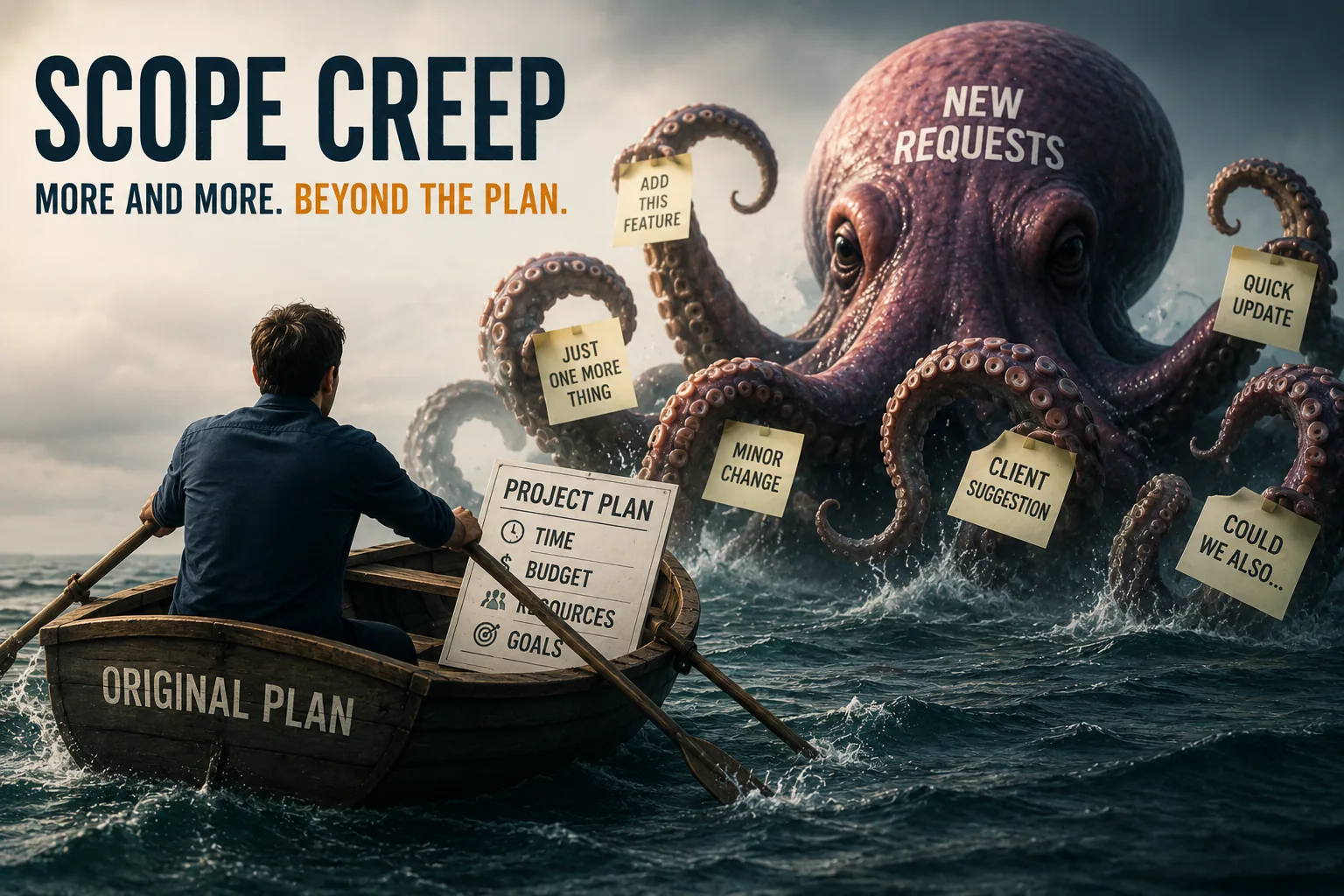
Understanding Scope Creep and Its Impact on Projects
This is the CitePep accuracy record for “Understanding Scope Creep and Its Impact on Projects”, published by When Notes Fly. It lists every change experts checked and accepted on that page.
Scope creep refers to project expansion beyond initial plans, leading to delays and budget overruns.
What has been corrected on this page?
Every accepted correction to this page is recorded with the exact change, so readers can see how the page improved over time.
-
Corrected 4 citation errors: a fully unverified Standish Group '2021 edition' survey statistic (34 percent scope creep, 60 percent more likely to fail) with no basis in any real Standish CHAOS report;
Bent Flyvbjerg's real database size understated roughly 8-fold (2,000 vs the real 16,000+ projects by 2023) plus an unverified '23 percent of final cost overruns' scope-expansion statistic; the Kahneman-Tversky loss-aversion ratio misattributed solely to their 1979 Econometrica paper when the specific coefficient comes from their 1992 follow-up;
and an unverified Jeffrey Pinto study on political skill and scope creep with an incorrect Project Management Journal editorship timeframe (claimed 2000-2015, real 1990-1996).
What the page claimedArticle cited specific survey statistics, database sizes, and studies for real researchers and organizations that, on independent verification, were either entirely unverified or materially understated/misdated.
What was correctedReplaced the unverified Standish statistic with the organization's real, verifiable CHAOS 2020 methodology and general finding; corrected Flyvbjerg's database size and replaced the unverified percentage with his real, well-documented findings; clarified the Kahneman-Tversky citation to reference both the 1979 and 1992 papers; corrected Pinto's real editorship dates and softened the specific unverified finding to a general characterization of his real framework.
Why: Real organizations and researchers were credited with unverified statistics, understated figures, or misdated affiliations - the same fabrication pattern found across this batch of legacy articles.
View the full record →
Who checked this page?
1 contributor has checked "Understanding Scope Creep and Its Impact on Projects" on When Notes Fly. Each name below links to that person's public CitePep profile, where every contribution they have made is listed with the exact change they proposed.