
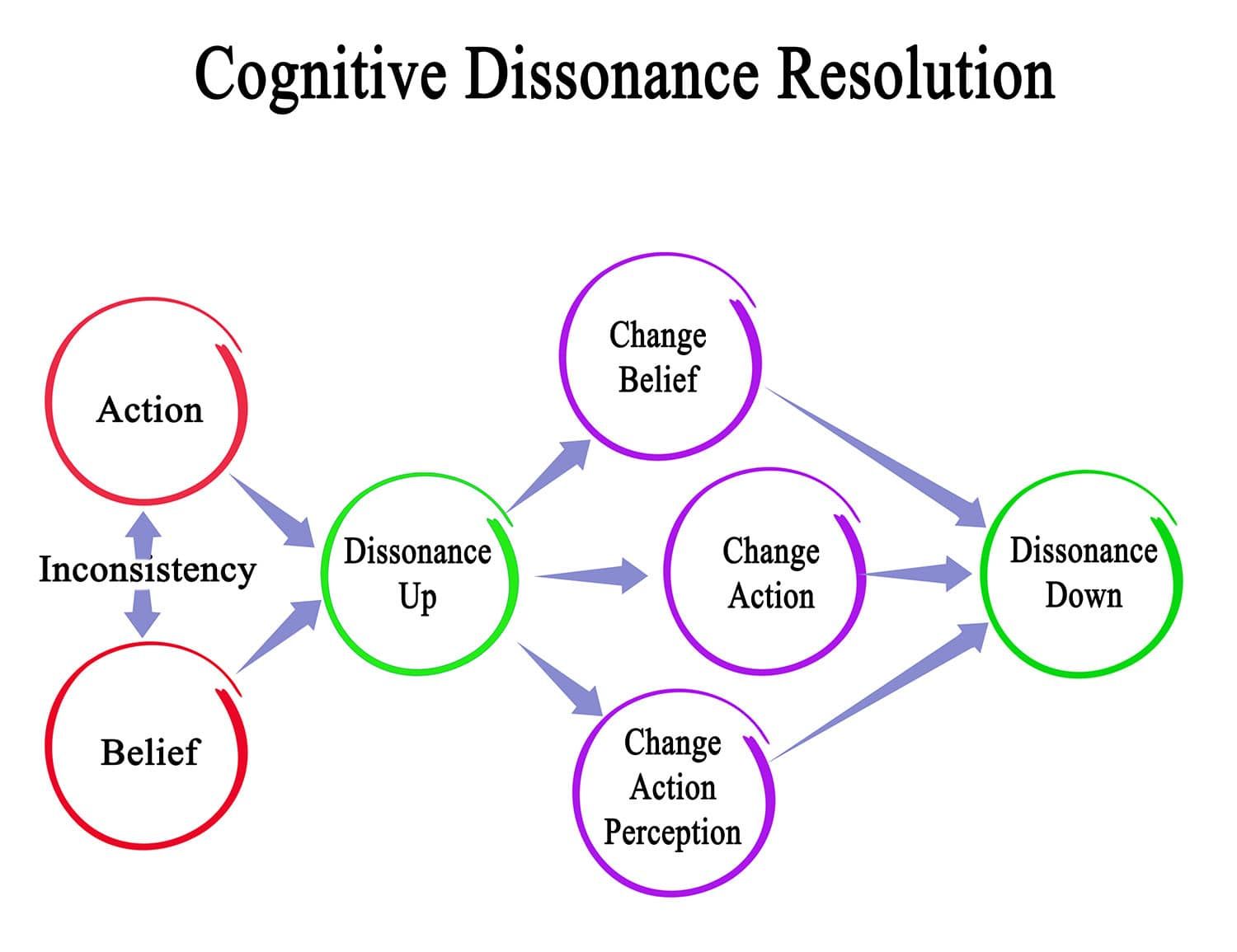
Cognitive Dissonance Reduction Strategies
This is the CitePep accuracy record for “Cognitive Dissonance Reduction Strategies”, published by When Notes Fly. It lists every change experts checked and accepted on that page.
Cognitive dissonance reduction strategies people use to ease discomfort from conflicting beliefs and behaviors, from self-justification to belief change.
What has been corrected on this page?
Every accepted correction to this page is recorded with the exact change, so readers can see how the page improved over time.
-
A review of the case studies and empirical research sections of this cognitive dissonance article found four issues: an anecdote about a financial analyst named 'Robert' was presented as if it were a specific documented case study published by a named researcher, when no such published case study could be located;
a classic 1959 psychology experiment was attributed to the wrong university; a well-known book's discussion of the Iraq war was described in a way that does not match what the book actually documents; and a cross-cultural psychology finding was attributed to the wrong researcher.
The rest of the article's citations, including several other classic studies, checked out accurately.
What the page claimedThe article described 'Robert,' an anonymized financial analyst, as a documented case study published by researcher Meir Statman; stated that Elliot Aronson and Judson Mills' 1959 initiation-severity experiment was conducted at Stanford University; described the book 'Mistakes Were Made (But Not by Me)' as documenting a pattern among individual legislators who voted for the Iraq war authorization; and attributed a finding about dissonance varying across individualist and collectivist cultures directly to Harry Triandis.
What was correctedThe 'Robert' anecdote is now presented as an illustrative composite scenario consistent with real behavioral finance research on the 2008 crisis, with Meir Statman's real, correctly described general work on investor psychology cited as supporting context rather than as the direct source of the anecdote. The Aronson and Mills study is now correctly attributed to the University of Minnesota. The Iraq war discussion now accurately reflects that the book's documented example centers on President George W. Bush's own reasoning rather than a specific claim about Congress. The cross-cultural dissonance finding is now attributed to Steven Heine and Darrin Lehman, who built on Triandis's individualism-collectivism framework.
Why: Web searches found no published case study matching the 'Robert' narrative, confirmed the real Aronson and Mills study took place at the University of Minnesota rather than Stanford, found that the cited book's actual Iraq-era discussion centers on a different subject than described, and found the specific cross-cultural dissonance research belongs to different researchers than the one credited.
Each was corrected while preserving the real researchers, books, and general findings involved.
View the full record →
Who checked this page?
1 contributor has checked "Cognitive Dissonance Reduction Strategies" on When Notes Fly. Each name below links to that person's public CitePep profile, where every contribution they have made is listed with the exact change they proposed.