
Correction Concepts
Cognitive Dissonance Reduction Strategies
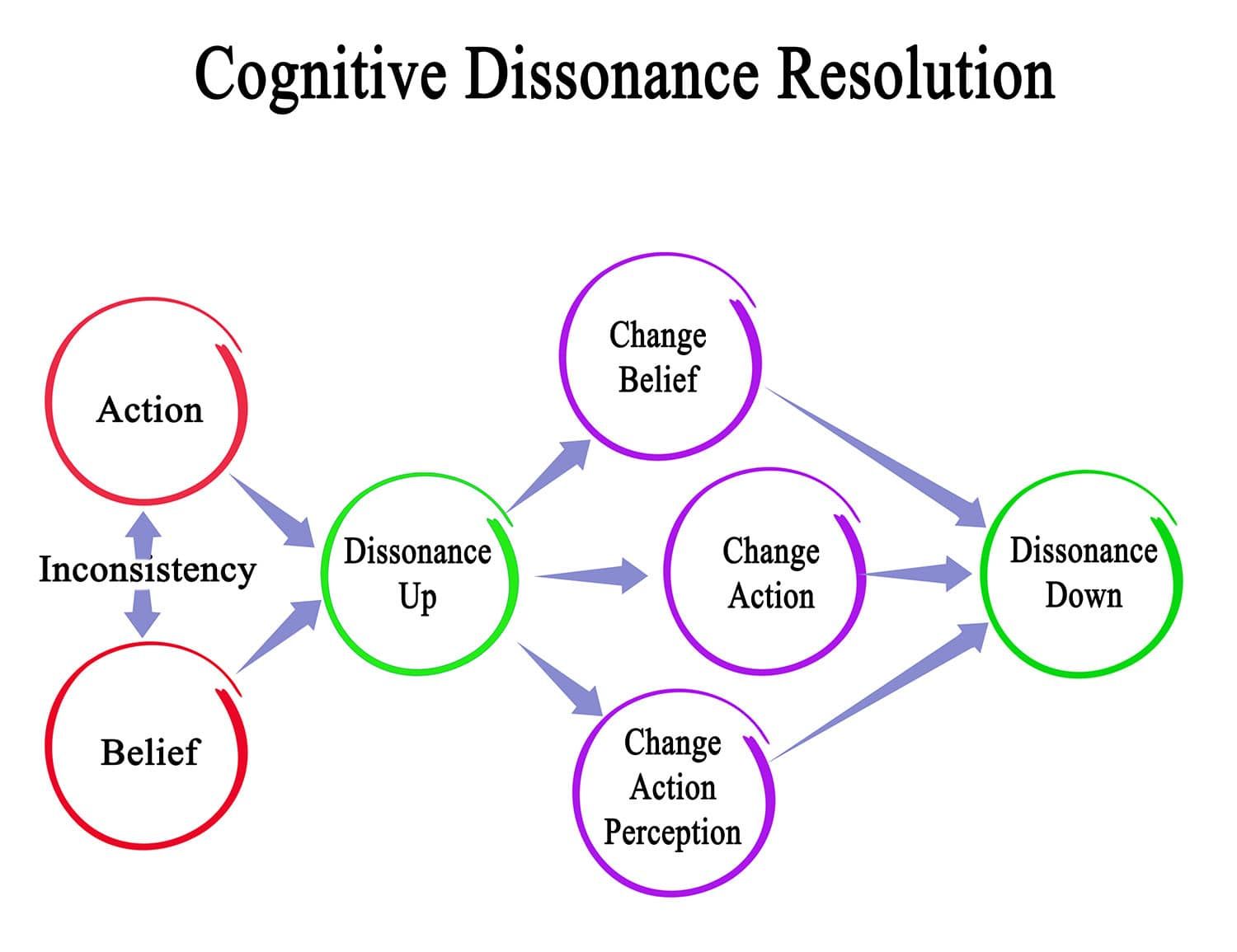
Cognitive dissonance reduction strategies people use to ease discomfort from conflicting beliefs and behaviors, from self-justification to belief change.
Factually incorrectNeeds stronger evidence
What was corrected
What the page claimed
The article described 'Robert,' an anonymized financial analyst, as a documented case study published by researcher Meir Statman; stated that Elliot Aronson and Judson Mills' 1959 initiation-severity experiment was conducted at Stanford University; described the book 'Mistakes Were Made (But Not by Me)' as documenting a pattern among individual legislators who voted for the Iraq war authorization; and attributed a finding about dissonance varying across individualist and collectivist cultures directly to Harry Triandis.
What was corrected
The 'Robert' anecdote is now presented as an illustrative composite scenario consistent with real behavioral finance research on the 2008 crisis, with Meir Statman's real, correctly described general work on investor psychology cited as supporting context rather than as the direct source of the anecdote. The Aronson and Mills study is now correctly attributed to the University of Minnesota. The Iraq war discussion now accurately reflects that the book's documented example centers on President George W. Bush's own reasoning rather than a specific claim about Congress. The cross-cultural dissonance finding is now attributed to Steven Heine and Darrin Lehman, who built on Triandis's individualism-collectivism framework.
Why this is better
Web searches found no published case study matching the 'Robert' narrative, confirmed the real Aronson and Mills study took place at the University of Minnesota rather than Stanford, found that the cited book's actual Iraq-era discussion centers on a different subject than described, and found the specific cross-cultural dissonance research belongs to different researchers than the one credited. Each was corrected while preserving the real researchers, books, and general findings involved.
More by Emir Baycan in Concepts
- Correction Learning Myths That Refuse to Die
- Correction First Principles Thinking: Elon Musk's Approach Explained
- Correction Nine Methods to Learn Anything Faster and Effectively
- Correction The Limits of Rules