

Only accepted work is recordedAboutGuidesContactSign in
CitePepCitePep

Pages on Record · Page 156

1693Pages on record
7Publications
8Verified contributors
1753Corrections

Every page with a public CitePep trust record: what was checked, what was corrected, and who did the work. CitePep is operating with its founding publications while onboarding independent publishers and contributors.

OSCP Buffer Overflow Module in 2026: Is It Still Required and How to Prepare
OSCP Buffer Overflow Module in 2026: Is It Still Required and How to Prepare CertoJob An explanation of whether the OSCP still tests buffer overflow in 2026, answering no: Offensive Security removed the dedicated 25-point buffer-overflow machine in March 2023 and the change has held t… MSMelik Can Sariyer
OSCP Exam Strategy: The 24-Hour Lab and Report Methodology
OSCP Exam Strategy: The 24-Hour Lab and Report Methodology CertoJob An OSCP exam-strategy guide covering the mechanics that decide pass or fail across nearly 24 hours of hacking plus a 24-hour report window, where most failures come from mismanaging the 47 hours rath… MSMelik Can Sariyer
How to Study for OSCP with Limited Lab Time: A Structured Approach
How to Study for OSCP with Limited Lab Time: A Structured Approach CertoJob A structured OSCP study plan for working professionals with limited time, built around a realistic 8-12 hours a week that puts a first-attempt pass at roughly 12-16 months. It lays out a five-phase p… MSMelik Can Sariyer

eJPT and PNPT: Entry-Level Offensive Security Certs Worth Pursuing
eJPT and PNPT: Entry-Level Offensive Security Certs Worth Pursuing CertoJob A comparison of two entry-level offensive-security certifications as stepping stones below OSCP: the eJPT (249 dollars, a 72-hour browser lab with 35 questions requiring you to actually compromise th… MSMelik Can Sariyer

CEH vs OSCP: Which Certification Proves More to Employers?
CEH vs OSCP: Which Certification Proves More to Employers? CertoJob A comparison of CEH and OSCP by what they prove to employers, turning on format rather than syllabus: CEH is a 125-question multiple-choice exam (935-1,199 dollars) while OSCP is a 24-hour live hacki… MSMelik Can Sariyer
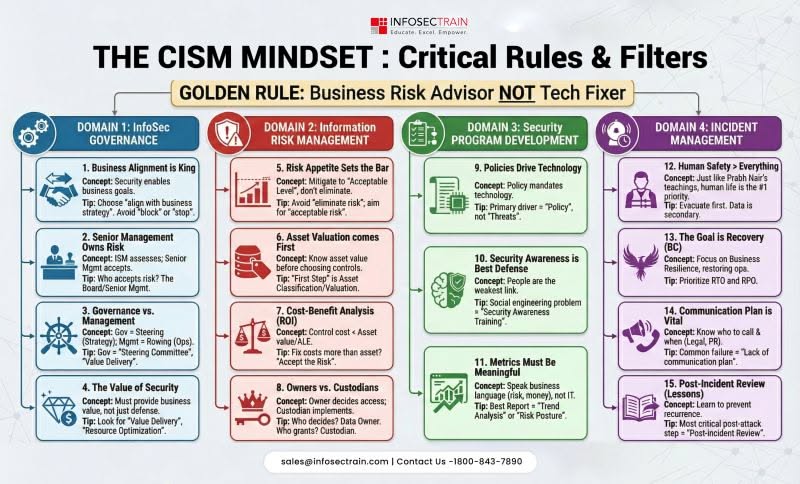
CISM for Security Managers: Study Approach and Exam Focus Areas
CISM for Security Managers: Study Approach and Exam Focus Areas CertoJob An exam guide to ISACA's CISM for aspiring security managers, which tests management capability rather than technical depth (it asks what you tell the board about risk posture, not how a firewall wor… MSMelik Can Sariyer

Cloud Security Certifications: CCSP, AWS Security, and Azure Security Compared
Cloud Security Certifications: CCSP, AWS Security, and Azure Security Compared CertoJob A comparison of the three major cloud security certifications, the vendor-neutral CCSP, the AWS Security Specialty (SCS-C02), and the Microsoft AZ-500, mapping each to a distinct career position rath… MSMelik Can Sariyer

CISSP Experience Requirement Explained: What Counts and What Does Not
CISSP Experience Requirement Explained: What Counts and What Does Not CertoJob An explanation of the CISSP experience requirement, which trips up candidates who pass the exam but cannot prove their work history: five years of cumulative paid experience in two or more of the eig… MSMelik Can Sariyer

CISSP Domains Ranked by Difficulty: Where Most Candidates Lose Points
CISSP Domains Ranked by Difficulty: Where Most Candidates Lose Points CertoJob A ranking of the eight CISSP domains by difficulty with the specific reasons candidates fail each, given a first-attempt pass rate around 20% driven not by obscure content but by the manager mindset… MSMelik Can Sariyer

CISSP CBK Domain 3 Security Architecture: The Most-Failed Domain Decoded
CISSP CBK Domain 3 Security Architecture: The Most-Failed Domain Decoded CertoJob A deep study guide to CISSP CBK Domain 3 (Security Architecture and Engineering), the domain where most candidates lose the most points because at 13% it covers more distinct topics than any other, c… MSMelik Can Sariyer

Put your pages on the record →

How a page gets here

Four checks before anything is recorded

A page appears here only after all four have passed. Nothing is listed on a publisher’s say-so alone.

1The site is verifiedThe publisher proved they control the domain with a meta tag or file.Once per site
2The contributor is verifiedTheir identity and expertise were confirmed before their work could count.Once per person
3The work cites a sourceEvery correction or source addition names the evidence behind it.Every contribution
4The publisher accepted itA person at the publisher read it and approved it. Only then is it recorded.Every contribution

Questions about page records

The short answer first, then the detail.
Does “verified” mean the page is correct?It means the work on it was checked

A verified record shows that named experts reviewed or corrected the page and the publisher accepted their work. It is strong evidence of care, but read the dates: a page reviewed two years ago may need a fresh look.

Why can’t I see declined corrections?They are kept private on purpose

A declined correction might be wrong, or might be right but not yet acted on. Publishing it would either spread an error or pressure publishers. Declined work is kept for integrity checks, not shown.

Can a record be edited or deleted?No, it only grows

Accepted entries can’t be changed or removed. If something turns out to be wrong, a new correction is added on top, so the full history stays visible.

I think a page is wrong. What can I do?Propose a correction, or report it

If you have the expertise, sign up and propose the exact fix with a source. If not, use “Report a problem” on the page record and the publisher is notified.

Something not covered?A named person replies within one working day.Ask a question →
Inside a page record

What you see when you open one

Status, every contributor and their role, and a timeline of each accepted change, the same record the publisher embeds on the page.

Put your pages on the record →
whennotesfly.com/active-listening-what-it-is-how-it-works-and-how-to-practise-it
Active Listening: What It Is, How It Works, and How to Practise ItVerified · 1 contributor
CorrectedEmir Baycan
ReviewedEmir Baycan
CorrectedEmir Baycan
05 Aug 2026CorrectedGlobal adoption 32% → 37% of teams
03 Aug 2026CorrectedAdded a supporting source
20 Mar 2026ReviewedAll 11 claims checked; no changes needed
3 Mar 2024CorrectedPage published