Correction Ideas
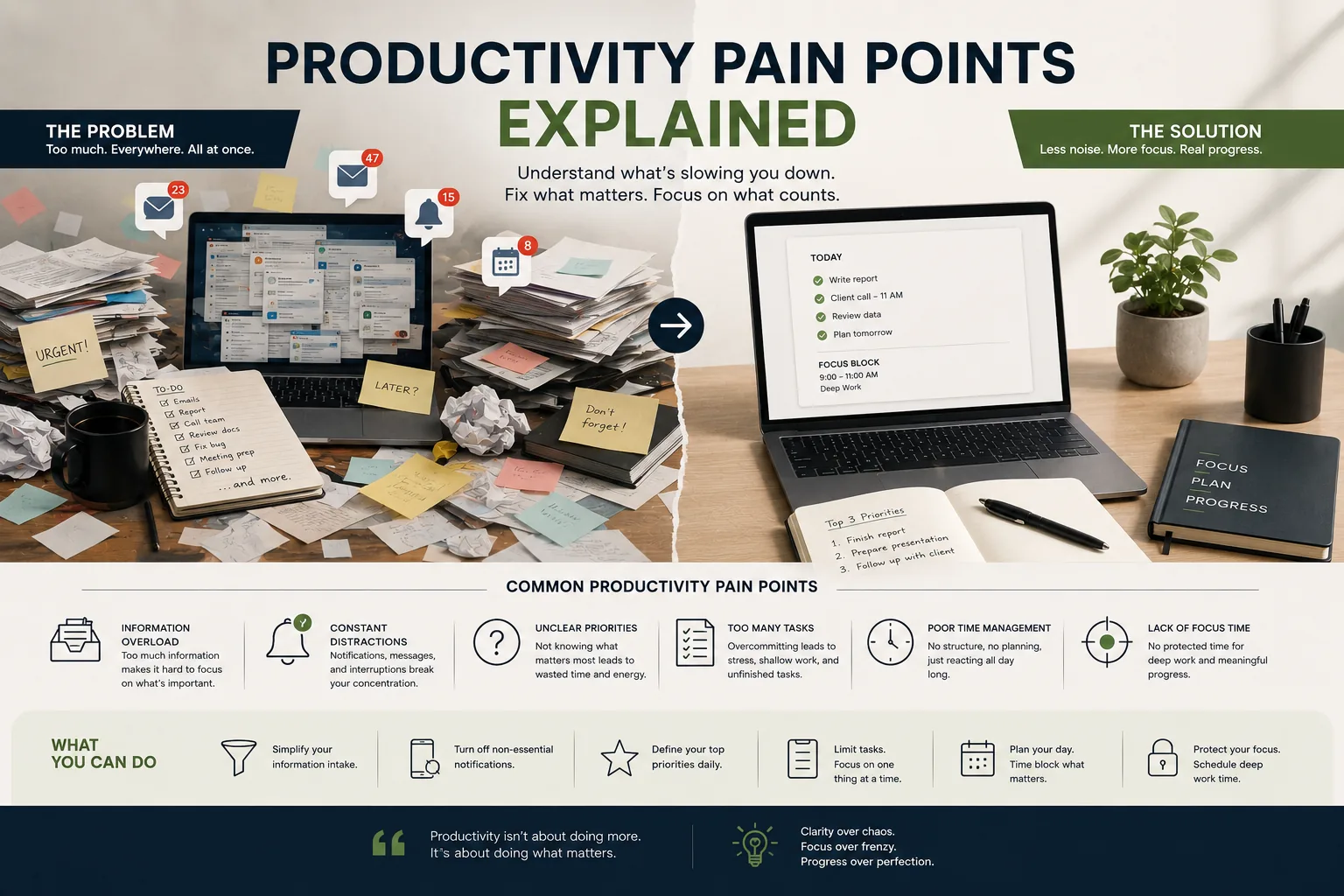
Understanding Productivity Pain Points
Understanding productivity pain points means seeing systemic friction, unclear priorities, and distractions, not personal failure.
Needs stronger evidenceMissing context
What was corrected
What the page claimed
The article attributed specific before/after meeting-time and "work about work" percentages (35%/25% before, 21%/18% after, from "18 months of data from approximately 10,000 employees") to Atlassian's 2020 Team Anywhere research, and attributed a 76% "not enough time in the day" figure plus a 57%/43% communication-versus-creation split to Microsoft's 2022 Work Trend Index. Neither the specific Atlassian percentages nor the 76%/57%/43% Microsoft figures could be verified against the real Atlassian distributed-work reports or the real 2022 Work Trend Index report, though Atlassian did run Team Anywhere starting in 2020 and Microsoft's 2022 report does genuinely include a real, verifiable 68% figure for insufficient focus time.
What was corrected
The article now describes Atlassian's real Team Anywhere initiative and its general, survey-based findings without the specific unverified before/after percentages, and describes Microsoft's real, verified 68% insufficient-focus-time figure from the 2022 Work Trend Index while removing the unverified 76% and 57%/43% figures, replacing them with the report's well-documented general finding of rising meeting and chat volume.
Why this is better
Both Atlassian's Team Anywhere program and Microsoft's 2022 Work Trend Index are real, but web searches against Microsoft's official Worklab pages and Atlassian's official distributed-work reports could not confirm the specific 76%, 57%/43%, or 35%/25%-to-21%/18% figures cited in the article. The one figure that could be independently verified, 68% reporting insufficient focus time, was kept; the unconfirmed figures were replaced with general, supportable descriptions of the same real research rather than a new specific statistic.
More by Emir Baycan in Ideas
- Correction Knowledge Worker Problems in 2026
- Correction GTD vs Bullet Journal: An Expert Comparison
- Correction Niche SaaS MVP Strategies
- Correction Service Businesses That Scale