Correction Ideas
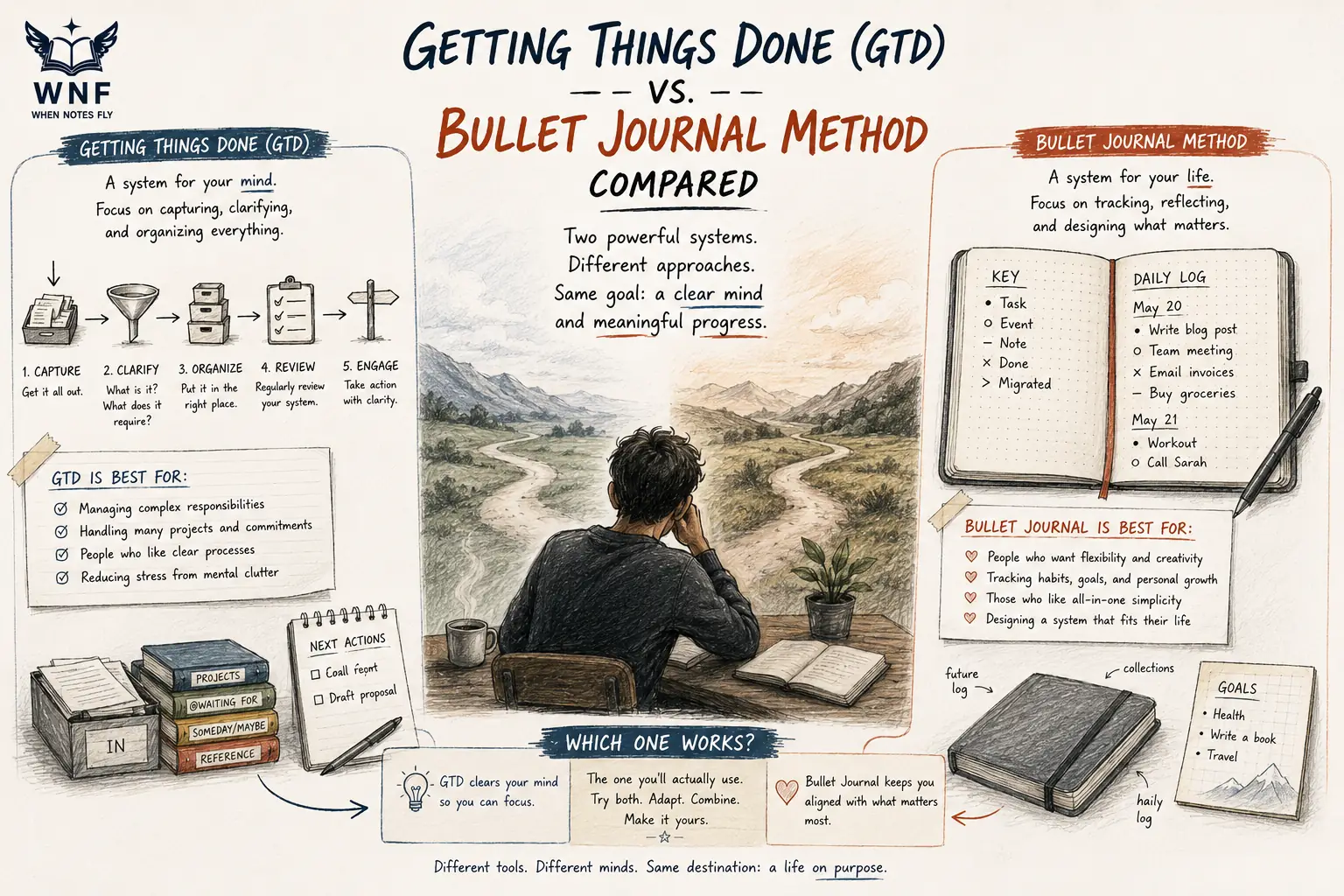
GTD vs Bullet Journal: An Expert Comparison
Get an in-depth look at the GTD and Bullet Journal methods, analyzing their effectiveness based on personal preferences and criteria.
Needs stronger evidenceFactually incorrect
What was corrected
What the page claimed
The article cited GTD as having sold 'over 2.5 million copies,' a figure that does not match any locatable source (real figures found range roughly from 1.2 to 4 million depending on year). It described a well-known 2011 study as finding that simply writing down unfinished tasks eliminates the Zeigarnik effect, when the study's real finding and title concern making a specific plan for the task, a related but different mechanism. It attributed a specific willpower-conservation argument about GTD to Kelly McGonigal's 'The Willpower Instinct' that could not be confirmed to appear in the book. It attributed a direct quotation to Teresa Amabile's 'The Progress Principle' and another to Tiago Forte's 'Building a Second Brain' that could not be located in either author's real published work. It also cited a 2021 Farnam Street article that could not be found anywhere.
What was corrected
The article now describes GTD's sales as 'well over a million copies,' a figure supported by real, locatable sources. It accurately describes the 2011 study's real finding and title concerning plan-making rather than simple task-recording. It describes McGonigal's book as sharing a compatible line of reasoning with GTD rather than attributing a specific, unconfirmed claim to its contents. It replaces the unconfirmed Amabile and Forte quotations with real, verifiable statements from their respective books on the same themes, and replaces the unlocatable Farnam Street citation with a real, already-referenced source.
Why this is better
Web searches confirmed that the large majority of this article's citations, including both books' publication histories, several direct quotes, and multiple supporting research studies, matched real, published sources closely. A smaller number of specific details, a sales figure, a study's described mechanism, a claim about a related book, two direct quotations, and one bibliography entry, could not be verified and were corrected or replaced with verifiable material covering the same point.
More by Emir Baycan in Ideas
- Correction Understanding Productivity Pain Points
- Correction Knowledge Worker Problems in 2026
- Correction Niche SaaS MVP Strategies
- Correction Service Businesses That Scale