
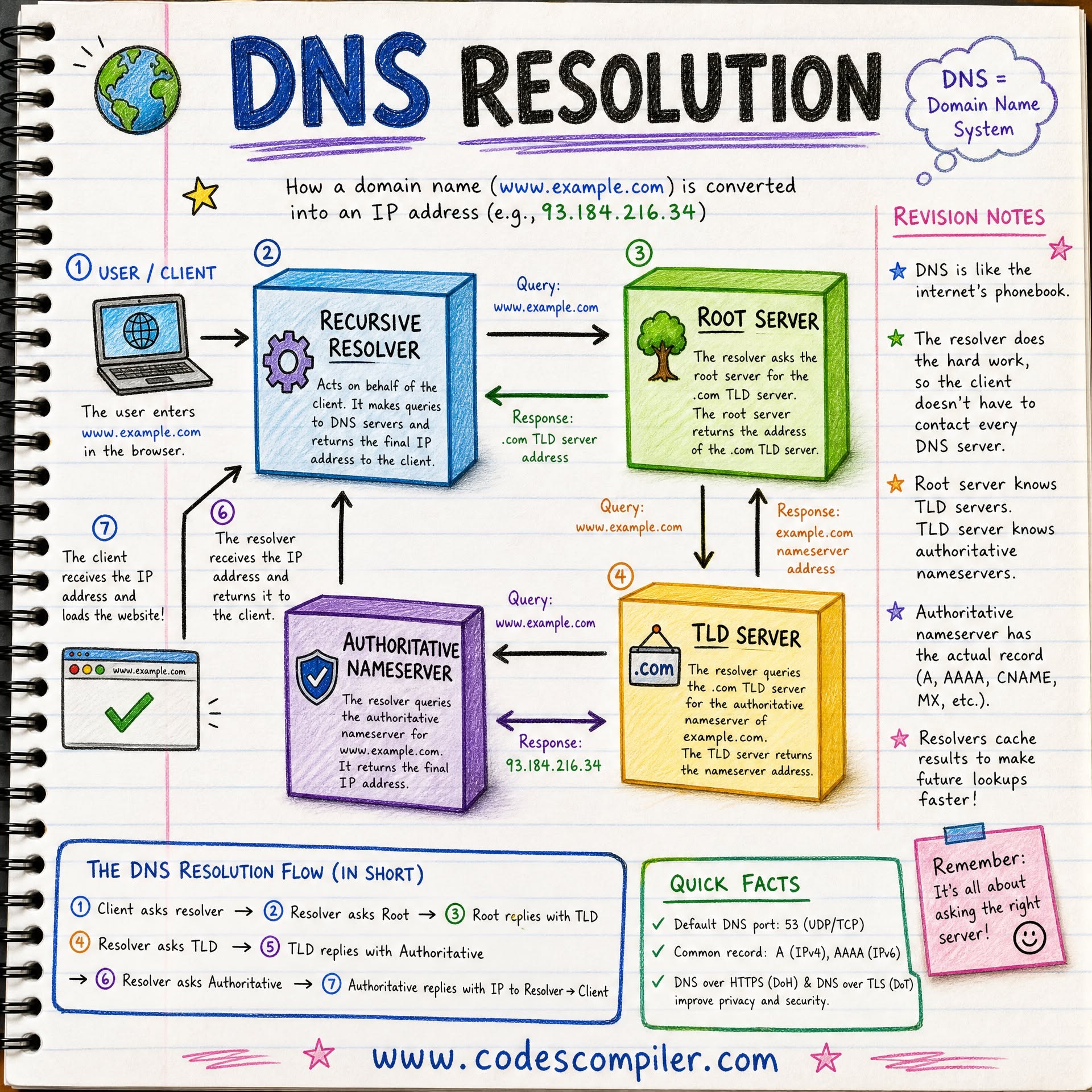
The Process of DNS Resolution Uncovered
This is the CitePep accuracy record for “The Process of DNS Resolution Uncovered”, published by When Notes Fly. It lists every change experts checked and accepted on that page.
DNS resolution involves querying caches and nameservers to resolve domain names into IP addresses.
What has been corrected on this page?
Every accepted correction to this page is recorded with the exact change, so readers can see how the page improved over time.
-
Corrected an unverified statistic on a real Akamai research chapter, a false-precision DNSSEC adoption claim, a citation misapplied to a real paper about an unrelated topic, an entirely unverified TU Delft study, an entirely unverified University of Illinois study, an understated Cloudflare query-volume figure, and a factually wrong detail about the 2017 .io outage.
What the page claimedArticle attributed an unverified '40-60% RTT reduction' statistic to a real 2014 Sitaraman et al. Akamai overlay-networks book chapter. It stated overly precise DNSSEC adoption figures ('30% zones signed, 40% resolvers validate') that oversimplify a metric that varies enormously by measurement methodology. It cited Heidemann et al.'s real 2008 IMC paper 'Census and Survey of the Visible Internet' as the source of a '40-80ms DNS resolution time' finding, when that real paper is actually about internet address-space census methodology and has nothing to do with DNS latency. It attributed an entirely unverified 2020 TU Delft study to 'Alexa Ryder' (no such researcher found) alongside real DNS researcher Tobias Fiebig, with an unverified '300 second median TTL' finding. It attributed an entirely unverified paper title ('Mining the Web with Webcrawlers, Bots and Spiders') and DNS resolver latency findings to five real University of Illinois researchers whose actual overlapping paper is about cloud cryptocurrency-mining abuse, unrelated to DNS. It cited Cloudflare's 2023 query volume as 'over 1 trillion per day,' which is true but understates real reporting of 1.9-2.1 trillion. And it described the 2017 .io outage as 'four of five nameservers unreachable,' when the real incident involved two nameservers returning incorrect NXDOMAIN responses, not simultaneous unreachability of four servers.
What was correctedSitaraman citation reframed to describe the chapter's real content without the unverified statistic. DNSSEC passage rewritten to acknowledge the real variability in adoption measurement rather than presenting false precision. Heidemann citation removed and replaced with a general, accurate statement about DNS latency factors, since the specific paper doesn't support the specific claim. The unverified Ryder/Fiebig study replaced with an accurate general statement, keeping only the real researcher Fiebig's actual area of work. The unverified Tahir et al. citation removed and replaced with a general, accurate statement about independent DNS resolver benchmarking. Cloudflare's query volume figure updated to reflect the higher real-world reported numbers. The .io outage corrected to the real mechanism (two nameservers returning incorrect NXDOMAIN, not four unreachable).
Why: This is a long, highly technical reference article (roughly 90,000 characters) where the vast majority of content - RFC citations, protocol mechanics, record-type documentation, debugging tool usage - was verified accurate and left untouched.
Fabrication was concentrated entirely in the 'What Research Shows' and 'Real-World DNS Case Studies' tail sections, consistent with the pattern found across this entire batch of articles. The real incidents cited (2016 Dyn DDoS attack, 2021 Facebook BGP outage) were independently verified as accurately described.
View the full record →
Who checked this page?
1 contributor has checked "The Process of DNS Resolution Uncovered" on When Notes Fly. Each name below links to that person's public CitePep profile, where every contribution they have made is listed with the exact change they proposed.