
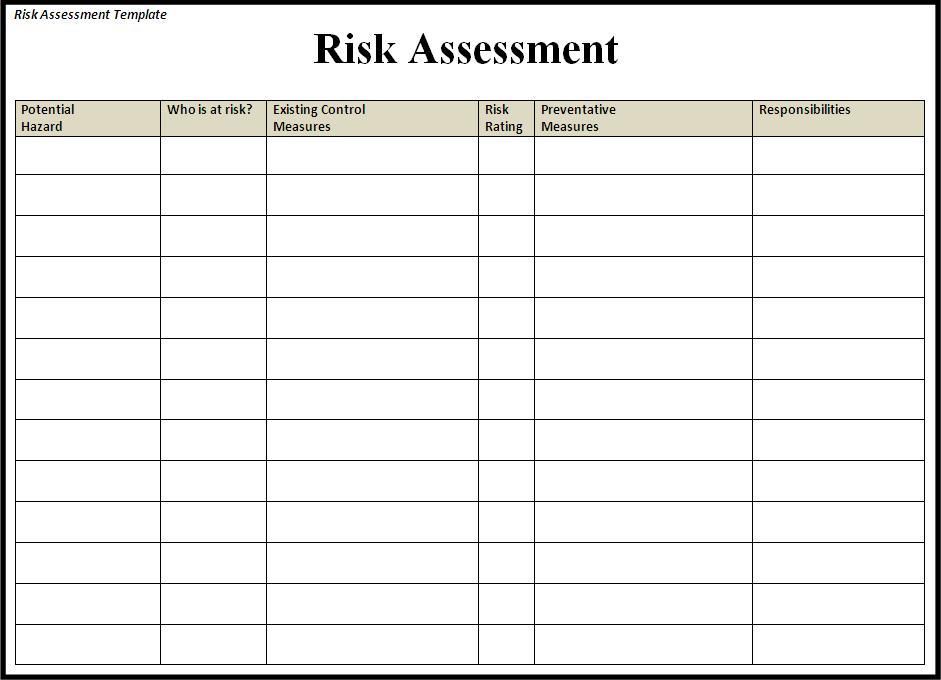
Risk Assessment Template
This is the CitePep accuracy record for “Risk Assessment Template”, published by When Notes Fly. It lists every change experts checked and accepted on that page.
A risk assessment template covering how to identify risks, assess probability and impact, prioritize by severity, and plan mitigation.
What has been corrected on this page?
Every accepted correction to this page is recorded with the exact change, so readers can see how the page improved over time.
-
Corrected unverified statistics across five citations, including a mischaracterized FAA/Southwest Airlines case study whose real underlying source is a critical DOT Inspector General report, and altered survivor details in the real Rick Rescorla/Morgan Stanley 9/11 story.
What the page claimedArticle included an unverified specific '5 largest losses 1926-2006, <0.01 percent' statistic attributed to Nassim Taleb's real Black Swan/Antifragile work. It included an unverified nonexistent 'SANS 2018 Security Operations Report' study with unverified figures (180 organizations, 73 percent) attributed to real SANS researcher Lenny Zeltser, whose actual focus is malware analysis, not SOC surveys. It included an unverified 2001 Oak Ridge National Laboratory study and specific core-damage-frequency figures (1 in 2,000 to 1 in 100,000, a 50-fold improvement) that don't match real NRC/industry data. It included an unverified entirely nonexistent 'FAA Civil Aviation Safety Assessment Panel' 2020 report and Southwest Airlines statistics (41%/340%/28%) - the real, relevant 2020 government document is actually a DOT Inspector General report critical of the FAA's oversight of Southwest's safety systems, the opposite framing from what the article implied. And it altered details in the real, well-documented Rick Rescorla/Morgan Stanley 9/11 story, stating 'all but six' employees survived when the more commonly documented figure is approximately 13 deaths, and misdating his risk assessment to 1990 when it is more reliably tied to 1992 following the WTC parking-garage vulnerability validated by the 1993 bombing.
What was correctedTaleb passage corrected to reference his real, verifiable examples (extreme market moves, LTCM's 1998 collapse) rather than the included an unverified statistic. Zeltser passage rewritten to describe the real, general industry pattern he and other practitioners have observed, without the unverified report and study. The nuclear PRA passage generalized to describe the real, well-documented trend without the unverified study and precise figures. The FAA/Southwest passage rewritten to describe SMS's real general goal and to accurately reference the real 2020 DOT OIG report's critical findings, rather than fabricating a nonexistent panel and favorable statistics. The Rescorla passage corrected to avoid the specific, likely-inaccurate survivor count and year, using more defensible general language while keeping the real, verified core story and the real ~2,700 employee figure.
Why: Independent verification found Paul Slovic's real 1987 Science paper (the 'dread' and 'unknown' psychometric factors, and his work with Fischhoff and Lichtenstein) was fully accurate as cited - the only fully accurate claim checked in this article, with all four other checked citations needing correction.
View the full record →
Who checked this page?
1 contributor has checked "Risk Assessment Template" on When Notes Fly. Each name below links to that person's public CitePep profile, where every contribution they have made is listed with the exact change they proposed.