
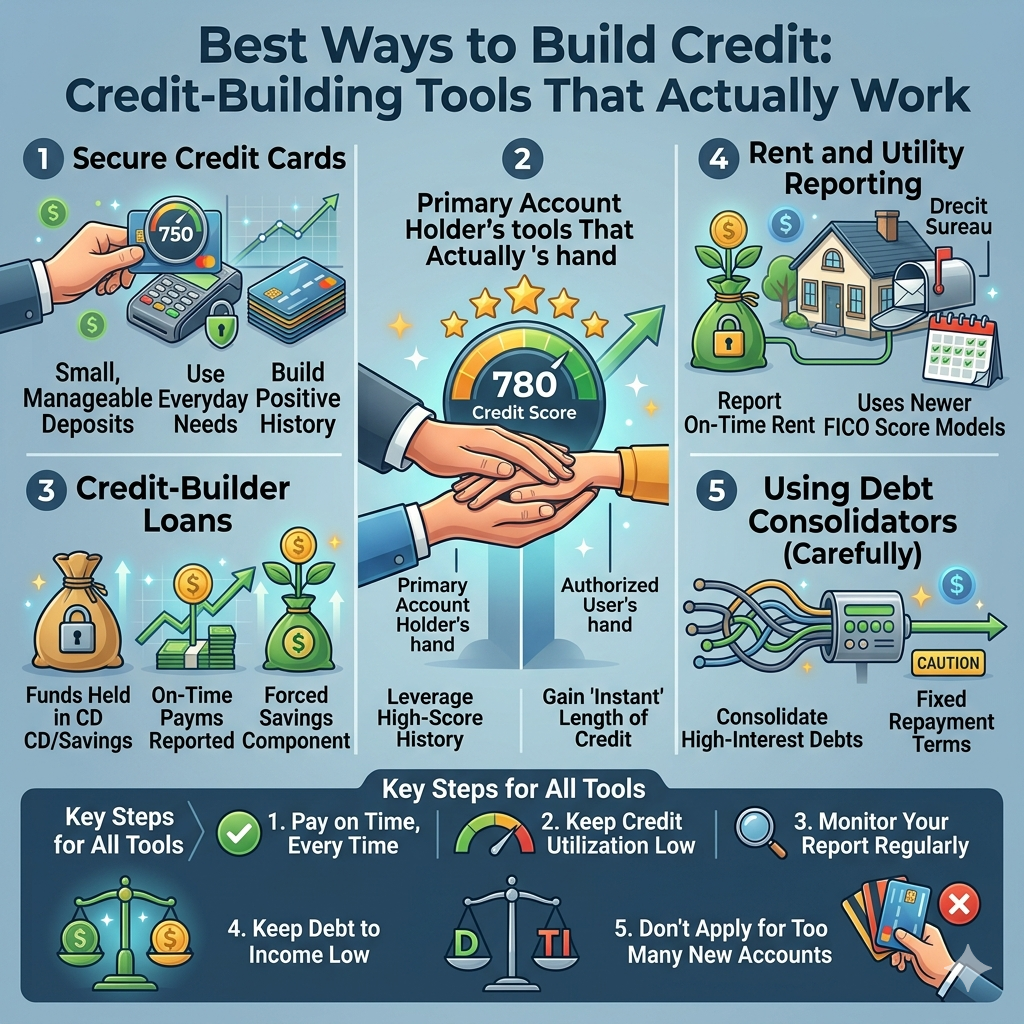
How to Build Credit: A Complete Guide
This is the CitePep accuracy record for “How to Build Credit: A Complete Guide”, published by When Notes Fly. It lists every change experts checked and accepted on that page.
Learn how to build credit from scratch or repair damaged credit using secured cards, credit-builder loans, and the authorized user strategy.
What has been corrected on this page?
Every accepted correction to this page is recorded with the exact change, so readers can see how the page improved over time.
-
Corrected seven overstated or mis-attributed claims: the 2010 Federal Reserve Board authorized-user report did not establish that authorized-user status accounts for about 10% of thin-file predictive power;
restated the CFPB credit-builder-loan findings conditionally (benefit concentrated among participants without an existing loan, little or no benefit for those with existing debt); qualified authorized-user and thin-file effects as case-dependent rather than universal; added a currency caveat to the 2024 CFPB medical-debt proposal (proposed rules whose status has changed);
framed the Experian rent-reporting ~20-point figure as an average vendor finding that does not guarantee an individual benefit; corrected the 2013 FTC error statistic (about 1 in 5 had an error on at least one of their three reports; about 1 in 20 had errors serious enough to affect credit terms);
and softened the credit-freeze claim from making fraud impossible to a very strong but not absolute protection.
What the page claimedThe article attributed a 10% thin-file predictive-power figure to a 2010 Fed study, reported a 24-point CFPB credit-builder result without full conditions, presented authorized-user and CBL effects as universal, treated a 2024 medical-debt proposal as current policy, cited an Experian ~21-point rent-reporting gain as a guarantee, stated 1 in 5 consumers had a verified error, and said a freeze makes new-account fraud impossible.
What was correctedRestated each claim to what the sources support: the Fed report's actual scope, the CFPB study's conditional findings, case-dependent thin-file effects, the proposed (not enacted) medical-debt rule, the Experian figure as an average vendor result, the FTC study's actual error framing, and the freeze as a very strong but not absolute protection.
Why: The sources are genuine but were mis-attributed or overstated. Corrections scope each claim to the primary source (2010 Fed report, CFPB credit-builder study, 2013 FTC report, Experian product data) rather than adding new sources.
View the full record →
Who checked this page?
1 contributor has checked "How to Build Credit: A Complete Guide" on When Notes Fly. Each name below links to that person's public CitePep profile, where every contribution they have made is listed with the exact change they proposed.