
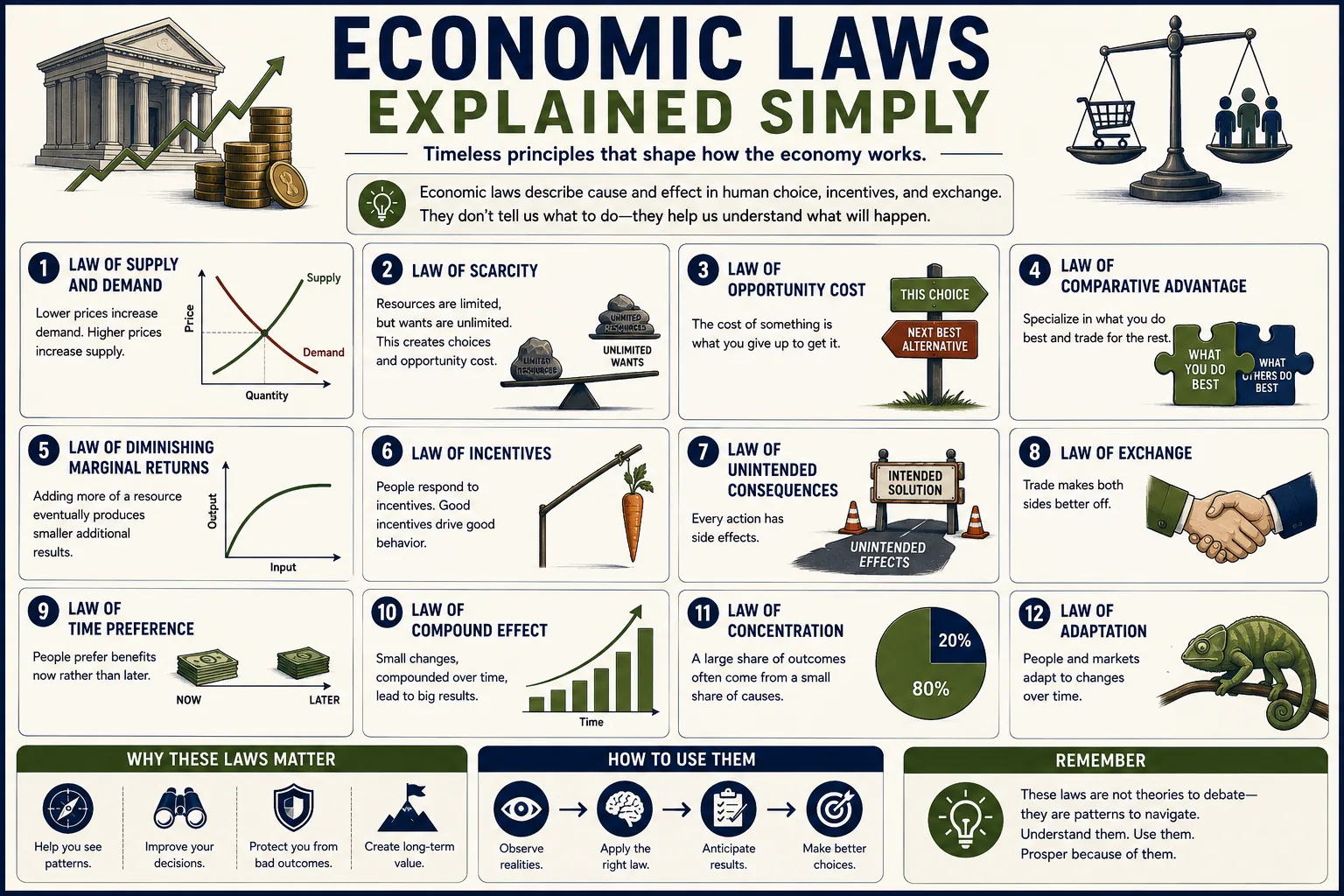
Economic Laws Explained Simply
This is the CitePep accuracy record for “Economic Laws Explained Simply”, published by When Notes Fly. It lists every change experts checked and accepted on that page.
Diminishing returns means more input yields less output over time. Supply and demand set prices.
What has been corrected on this page?
Every accepted correction to this page is recorded with the exact change, so readers can see how the page improved over time.
-
Corrected two altered statistics from otherwise accurately-cited real economics studies: the Gneezy & Rustichini daycare-fine effect size and the Autor/Dorn/Hanson China-trade-shock job-loss figure, which had been conflated with a different follow-up paper covering a different date range.
What the page claimedArticle cited the real Gneezy & Rustichini (2000, Journal of Legal Studies) Israeli daycare late-fee study but stated late arrivals 'increased by 70%,' when the study's actual finding is that late arrivals roughly doubled. Separately, the article correctly cited Autor, Dorn & Hanson's 2013 American Economic Review paper on the China trade shock (1990-2007) but attributed to it a 'approximately 2 million US manufacturing jobs' figure that actually comes from a later follow-up paper by the same authors covering 1999-2011 and a broader job-loss measure (not manufacturing-only, 1990-2007).
What was correctedGneezy & Rustichini figure corrected to 'roughly doubled.' Autor/Dorn/Hanson passage corrected to state the 2013 paper's actual finding (import competition explains roughly a quarter of the contemporaneous US manufacturing employment decline) and separately, correctly attributed, notes the ~2 million figure to the later 1999-2011 follow-up study.
Why: Independent verification found 4 of 6 major citations in this article (Kerr 1975, Benabou & Tirole 2003, Helpman & Krugman new trade theory, Porter 1985) were accurately described with correct figures - this article was substantially cleaner than others flagged in the same scan, with only two specific numbers needing correction rather than unverified sources.
View the full record →
Who checked this page?
1 contributor has checked "Economic Laws Explained Simply" on When Notes Fly. Each name below links to that person's public CitePep profile, where every contribution they have made is listed with the exact change they proposed.