
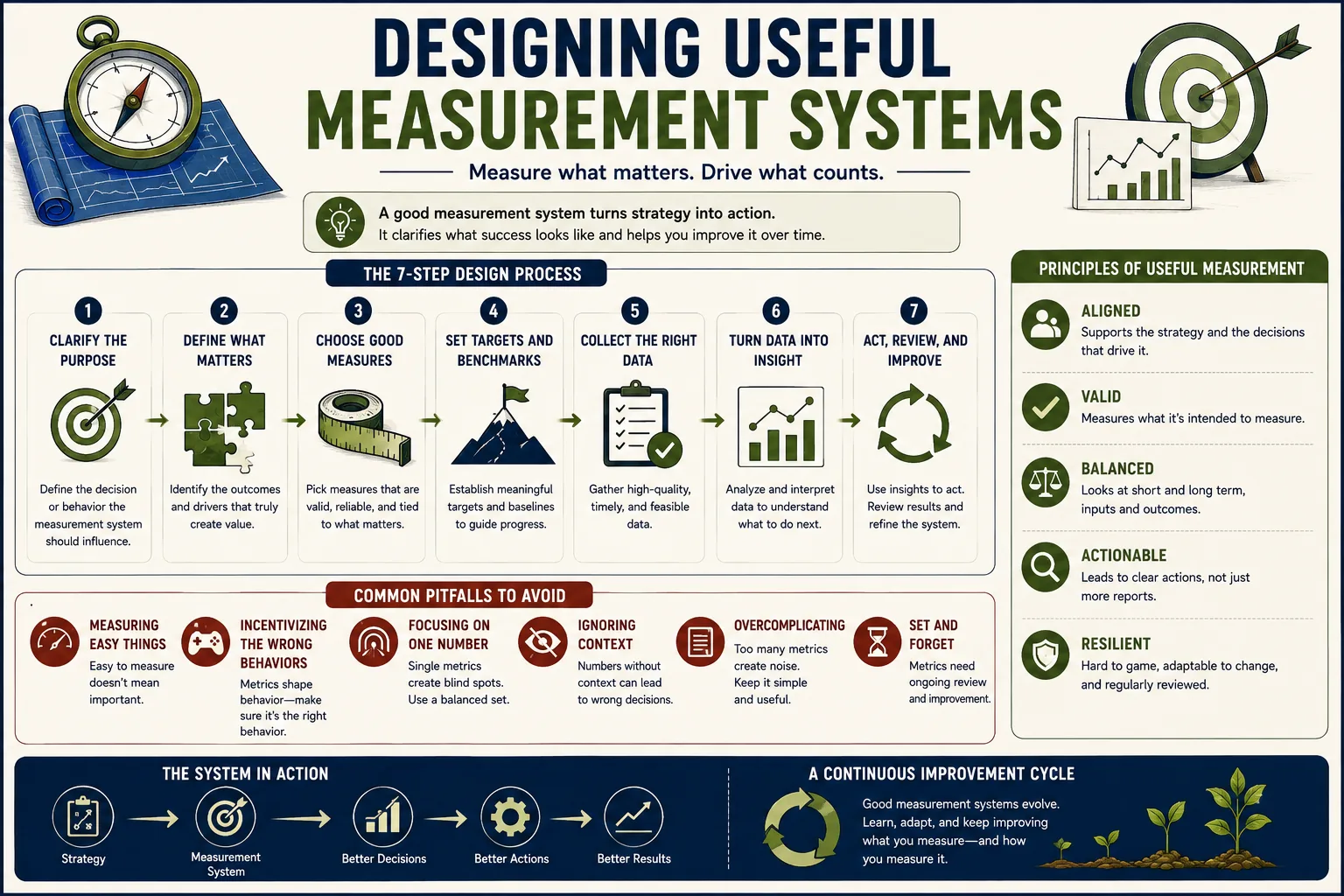
Creating Effective Measurement Systems for Better Insights
This is the CitePep accuracy record for “Creating Effective Measurement Systems for Better Insights”, published by When Notes Fly. It lists every change experts checked and accepted on that page.
Design measurement systems that focus on outcomes rather than activities for enhanced organizational effectiveness.
What has been corrected on this page?
Every accepted correction to this page is recorded with the exact change, so readers can see how the page improved over time.
-
Corrected an unverified statistic attached to Douglas Hubbard's real measurement-economics research: the article claimed Hubbard's research found organizations can eliminate '60 to 80 percent' of tracked metrics, a specific figure that could not be verified against his book How to Measure Anything or its secondary literature.
His real, well-documented finding (the 'measurement inversion') is that most tracked variables have information value near zero and only a handful per decision model justify deliberate measurement.
What the page claimedArticle cited a specific percentage range as if it were Hubbard's own published research finding, when no such figure appears in his work.
What was correctedReplaced the unverified percentage with an accurate description of Hubbard's real measurement inversion concept.
Why: A real author's general, well-supported argument was given an unverified precise statistic to sound more authoritative - Deming's 85/15 process-variation ratio, Kaplan and Norton's Balanced Scorecard research, Campbell's Law dating, and the Google OKR 60-70 percent figure in the same article all verified as accurate.
View the full record →
Who checked this page?
1 contributor has checked "Creating Effective Measurement Systems for Better Insights" on When Notes Fly. Each name below links to that person's public CitePep profile, where every contribution they have made is listed with the exact change they proposed.