
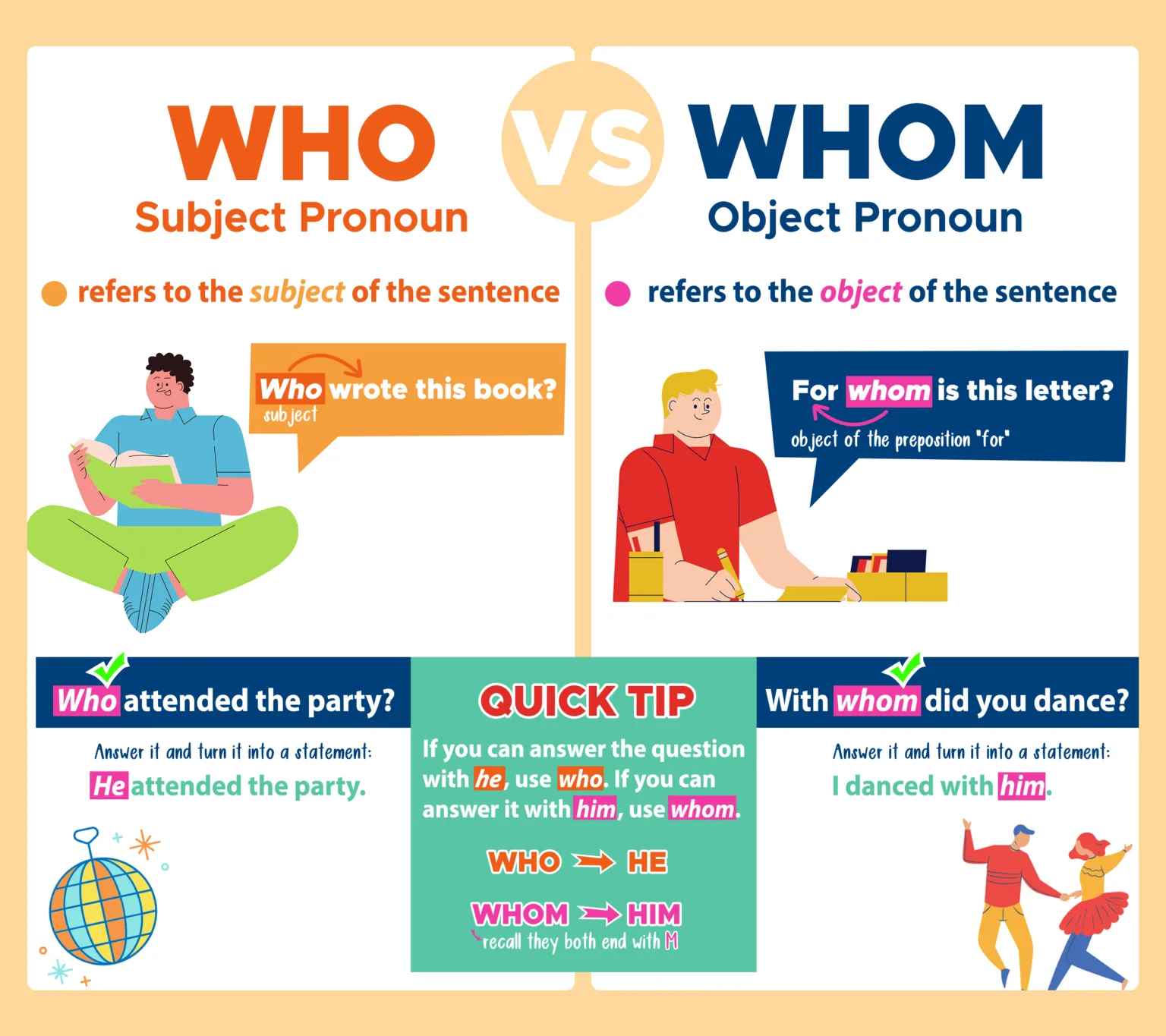
Who vs Whom: The Rule That Actually Works
This is the CitePep accuracy record for “Who vs Whom: The Rule That Actually Works”, published by Evolang. It lists every change experts checked and accepted on that page.
Master who vs whom with the he-or-him substitution test, embedded clause rules, and real examples from formal to casual writing.
What has been corrected on this page?
Every accepted correction to this page is recorded with the exact change, so readers can see how the page improved over time.
-
Unverified quote attributed to Mignon Fogarty. This exact quote could not be verified in Grammar Girl's Quick and Dirty Tips or any other indexed source.; unverified quote attributed to Bryan Garner. This exact quote could not be verified in Garner's Modern English Usage or any other indexed source.; unverified quote attributed to Benjamin Dreyer. This exact quote could not be verified in Dreyer's English or any other indexed source.
Before<blockquote> <p>"The 'he or him' test is a piece of grammatical machinery that has saved more writers from humiliation than any rule taught in a classroom. Run it fast, run it every time, and 'whom' stops being mysterious." Mignon Fogarty, Grammar Girl's Quick and Dirty Tips</p> </blockquote> [...] <blockquote> <p>"The single most common whom error I see in professional writing is 'whomever' used where 'whoever' belongs. Writers reach for 'whomever' because the clause follows a preposition, but the pronoun belongs to the verb, not the preposition." Bryan Garner, Garner's Modern English Usage</p> </blockquote> [...] <blockquote> <p>"Whom has always been more common in writing than in speech. It is now retreating even in writing, though it still signals formality and precision. Writers who use it correctly earn trust. Writers who use it incorrectly embarrass themselves faster than if they had simply written who." Benjamin Dreyer, Dreyer's English</p> </blockquote>
After<blockquote> <p>Grammar writers such as Mignon Fogarty of Grammar Girl recommend the 'he or him' substitution test as a fast, reliable way to resolve who versus whom, since running it consistently takes the mystery out of the choice.</p> </blockquote> [...] <blockquote> <p>Usage guides such as Bryan Garner's Garner's Modern English Usage note that one of the most common whom-related errors is using 'whomever' where 'whoever' belongs, because writers focus on the preceding preposition rather than the pronoun's actual role inside its own clause.</p> </blockquote> [...] <blockquote> <p>Style writers such as Benjamin Dreyer, author of Dreyer's English, have noted that 'whom' has always been more common in writing than in speech and is now retreating even there, though using it correctly still signals formality and precision, while misusing it can be more noticeable than simply using 'who.'</p> </blockquote>
Why: Unverified quote attributed to Mignon Fogarty. This exact quote could not be verified in Grammar Girl's Quick and Dirty Tips or any other indexed source.; unverified quote attributed to Bryan Garner. This exact quote could not be verified in Garner's Modern English Usage or any other indexed source.; unverified quote attributed to Benjamin Dreyer. This exact quote could not be verified in Dreyer's English or any other indexed source.
View the full record →
Who checked this page?
1 contributor has checked "Who vs Whom: The Rule That Actually Works" on Evolang. Each name below links to that person's public CitePep profile, where every contribution they have made is listed with the exact change they proposed.