
Correction Psychology Behavior
Psychological Reactance: Why Bans Backfire
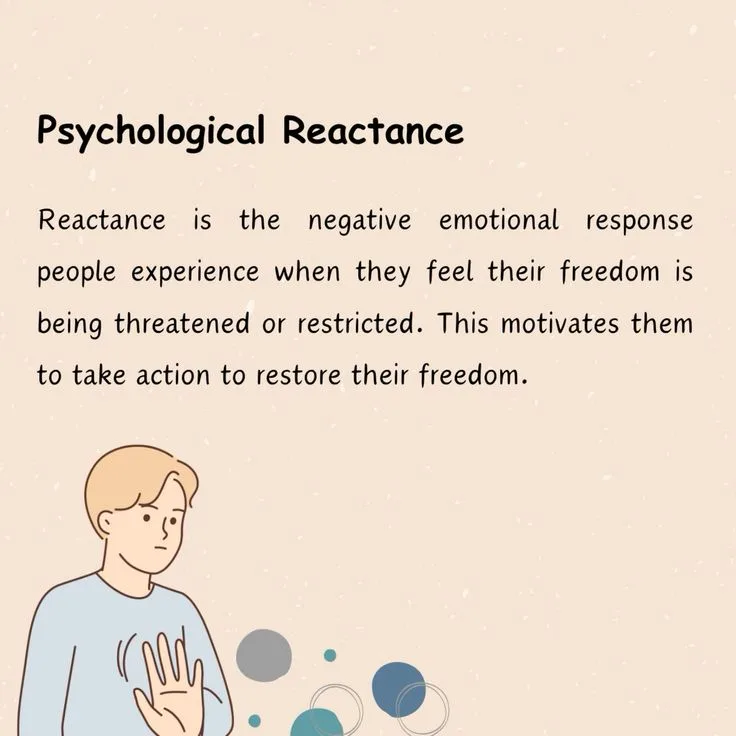
Psychological reactance explains why bans backfire: Brehm showed a restriction makes the forbidden option more desirable and the restrictor less trusted.
Factually incorrectNeeds stronger evidence
The exact change
Before
The research literature on reactance spans six decades and dozens of domains, and its conclusions are unusually coherent for a field as heterogeneous as social psychology. by Rains (2013), published in Human Communication Research, examining 20 studies on freedom threat and persuasive messages, found that messages low in freedom threat produced more positive attitudes toward recommended behaviors and more behavioral compliance than messages high in freedom threat.[8]
After
Effect sizes were moderate to large, with a mean weighted r of approximately .30 - substantial for a persuasion research meta-analysis. The Worchel, Lee, and Adewole 1975 cookie study has been replicated and extended by subsequent research on scarcity in consumer contexts.
Why this is better
Abstract reports no r of .30 effect size. Source: https://doi.org/10.1111/j.1468-2958.2012.01443.x Rains 2013 meta-analyzed K=20, N=4,942 and tested path models of reactance; it did not report the low vs high threat attitude/compliance comparison. Source: https://doi.org/10.1111/j.1468-2958.2012.01443.x The meta-analysis abstract reports no mean weighted r of .30. Source: https://doi.org/10.1111/j.1468-2958.2012.01443.x
More by Emir Baycan in Psychology Behavior
- Correction Understanding Positive Psychology's Key Concepts
- Correction The Impact of Sleep on Learning and Memory
- Correction Retroactive Interference and Memory Disruption Defined
- Correction Dunning-Kruger Effect: Key Research and Myths