
Correction Psychology Behavior
The Impact of Sleep on Learning and Memory
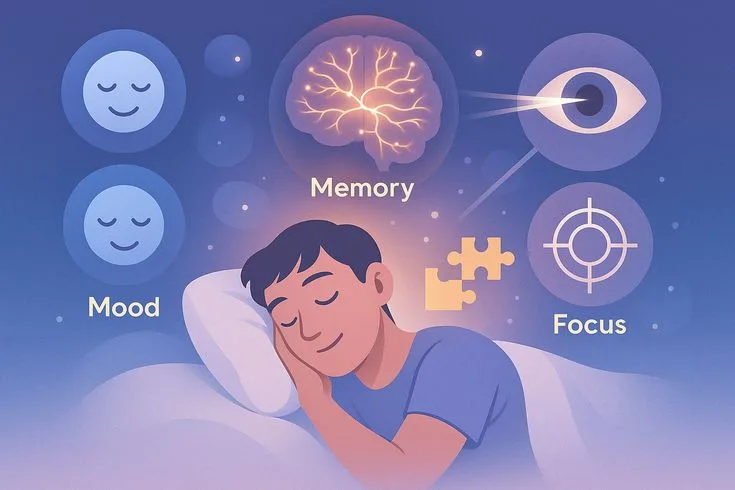
Sleep and memory consolidation does more than preserve: sleepers were nearly three times likelier to spot a hidden shortcut than people who stayed awake.
Factually incorrectMisleading wording
The exact change
Before
A 2019 study by Simon and Walker, published in Nature Human Behaviour, found that even a single night of inadequate sleep significantly increased anxiety levels the following day, with the anxiety concentrated in the brain regions and networks associated with chronic anxiety disorder. This suggests that sleep deprivation does not merely impair cognition: it produces a transient state that closely resembles clinical anxiety in its neural profile.
After
A 2019 study by Ben Simon, Walker and colleagues, published in Nature Human Behaviour, found that even a single night of lost sleep significantly increased anxiety levels the following day, an effect linked to impaired medial prefrontal cortex activity and its connectivity with limbic regions. This suggests that sleep deprivation does not merely impair cognition: it also raises anxiety, through impaired medial prefrontal and limbic function.
Why this is better
Ben Simon, Rossi, Harvey & Walker (Nat Hum Behav, online 2019-11-04): anxiogenic effect of sleep loss linked to impaired medial prefrontal cortex activity and connectivity with extended limbic regions. Source: https://doi.org/10.1038/s41562-019-0754-8 The abstract reports increased anxiety linked to impaired medial prefrontal and limbic networks, not a neural profile resembling clinical anxiety. Source: https://doi.org/10.1038/s41562-019-0754-8
More by Emir Baycan in Psychology Behavior
- Correction Understanding Positive Psychology's Key Concepts
- Correction Retroactive Interference and Memory Disruption Defined
- Correction Dunning-Kruger Effect: Key Research and Myths
- Correction Meditation vs Exercise: Evidence for Mental Health