
Correction Psychology Behavior
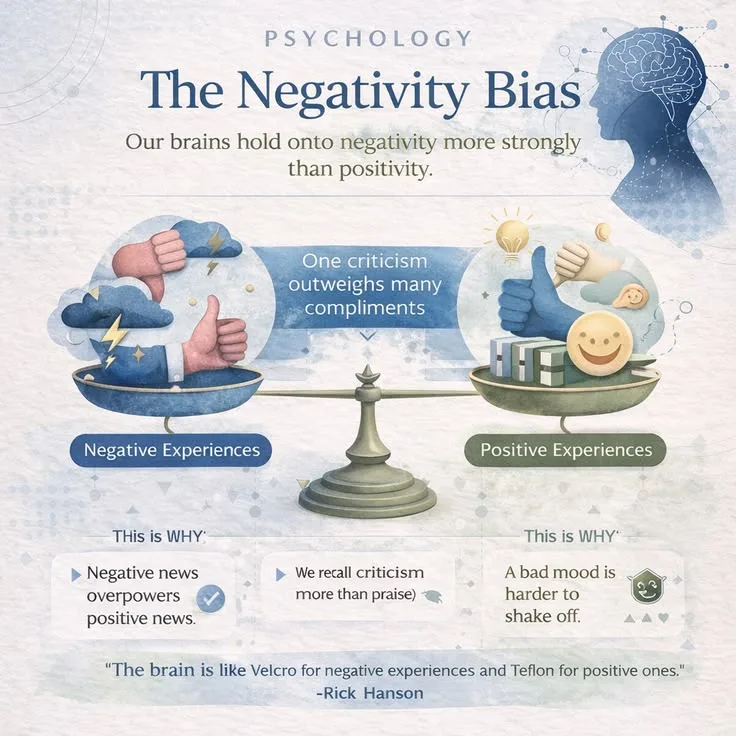
The Negativity Bias: Why Bad Is Stronger Than Good
Negativity bias, why bad outweighs good, Gottman's 5-to-1 marriage ratio, and news viewers in 17 countries reacting harder to negative clips.
Factually incorrect
The exact change
Before
A seminal study by Arne Ohman and colleagues at the Karolinska Institute in Stockholm found that fearful faces were detected more rapidly than happy faces in visual search arrays, even when the fearful faces were masked, suggesting the processing advantage occurred outside conscious awareness.[11] A 2011 study by David Sparks and colleagues examined the relative influence of positive and negative user reviews on purchase intentions in online retail.
After
A seminal study by Arne Ohman and colleagues at the Karolinska Institute in Stockholm found that schematic threatening faces were detected more quickly and accurately than friendly faces in visual search arrays.[11] A 2011 study by Beverley Sparks and colleagues examined the influence of positive and negative online reviews on hotel booking intentions and consumer trust.
Why this is better
Abstract: across 5 experiments schematic threatening faces were detected faster and more accurately than friendly targets; no masking. Source: https://doi.org/10.1037/0022-3514.80.3.381 Sparks and Browning (2011, Tourism Management 32(6)) studied online reviews, hotel booking intentions and trust; first author is Beverley Sparks. Source: https://doi.org/10.1016/j.tourman.2010.12.011
More by Emir Baycan in Psychology Behavior
- Correction Understanding Positive Psychology's Key Concepts
- Correction The Impact of Sleep on Learning and Memory
- Correction Retroactive Interference and Memory Disruption Defined
- Correction Dunning-Kruger Effect: Key Research and Myths