
Correction Automation And Process Design
Automation vs Manual Processes
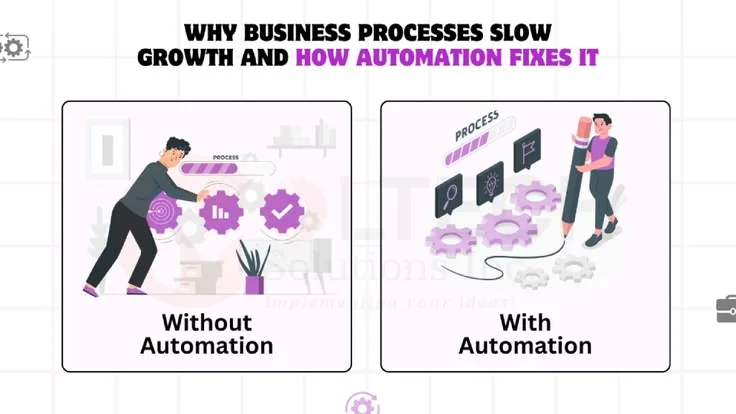
Automation is fast, consistent, scalable but brittle on edge cases. Manual processes are flexible, handle exceptions, have lower startup cost.
Factually incorrectNeeds stronger evidence
What was corrected
What the page claimed
Article included an unverified statistics ('26 percent vs 4 percent,' '1,500 companies') attached to Brynjolfsson and McAfee's real automation research. It included an unverified figures ('11 sectors,' '20 percent of firms,' '3 to 7 times higher error rates') attached to the real MIT Work of the Future Task Force. It misattributed the real 2012 robo-signing scandal's 5 billion National Mortgage Settlement solely to Bank of America, when the settlement actually involved five major servicers (Ally, Bank of America, Citigroup, JPMorgan Chase, Wells Fargo) plus 49 state attorneys general. It cited an entirely unverified University of Pennsylvania Wharton School study of Amazon's Kiva robotics deployment with unverified figures (40-50% throughput, 12-18 month transition), though the real 75 million Kiva acquisition price was accurate. It cited an entirely unverified 2019 Journal of the American Medical Informatics Association study of '47 US hospitals' with unverified burnout/throughput figures. It cited an entirely unverified 2018 Carnegie Mellon Software Engineering Institute study of '240 enterprise automation deployments' with unverified failure-rate figures. And it misdated a real FAA report on automation-related pilot skill decay from its real 2013 publication ('Operational Use of Flight Path Management Systems') to an unverified '2019 report analyzing accidents from 2010-2018,' adding an unverifiable '3 to 5 minutes per flight' statistic.
What was corrected
Brynjolfsson/McAfee and MIT Work of the Future passages rewritten to describe their real, general findings without the included an unverified statistics. The Bank of America case study corrected to accurately describe the real five-servicer National Mortgage Settlement. The unverified Wharton study was removed, keeping only the real, verified Kiva acquisition price and a general accurate description of the transition period. The unverified JAMIA and CMU SEI studies were removed and replaced with accurate general statements about the real, well-documented underlying phenomena (EHR-related burnout, monitoring-gap failures) without inventing specific studies or statistics. The FAA passage corrected to the real 2013 report and title, with the unverified statistic removed.
Why this is better
This continues the established pattern for this batch: every citation anchored to a real person, institution, or event, but nearly every specific quantitative statistic was unverified or unverifiable - including one clear case of misattributing a joint five-bank settlement solely to a single company, which changes the legal and factual accuracy of the case study, not just its statistics.