
Correction Productivity Time Management
Attention Residue: Understanding the Cost of Task Switching
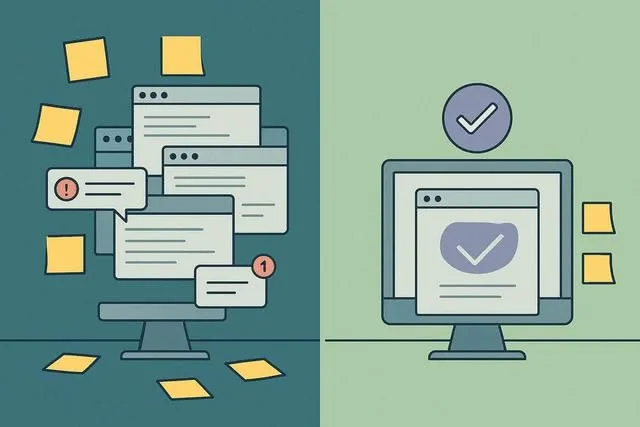
Attention residue explains why switching costs more than the clock shows: part of your attention stays on the unfinished task.
Factually incorrect
The exact change
Before
Subsequent Replications and Extensions
After
Routine tasks generated less residue, suggesting that the phenomenon is particularly damaging for the kind of work organizations value most.
Why this is better
Leroy & Glomb (Organization Science 2018) concern anticipated time pressure on resumption causing attention residue, mitigated by a ready-to-resume plan; nothing on high cognitive load tasks. Source: https://doi.org/10.1287/orsc.2017.1184
More by Emir Baycan in Productivity Time Management
- Correction Step-by-Step Burnout Recovery Plan Backed by Research
- Correction The Two-Minute Rule: A Productive Time Management Hack
- Correction What Is Work-Life Balance: What Research Actually Shows
- Correction Effective Time Management Techniques: What Research Says