
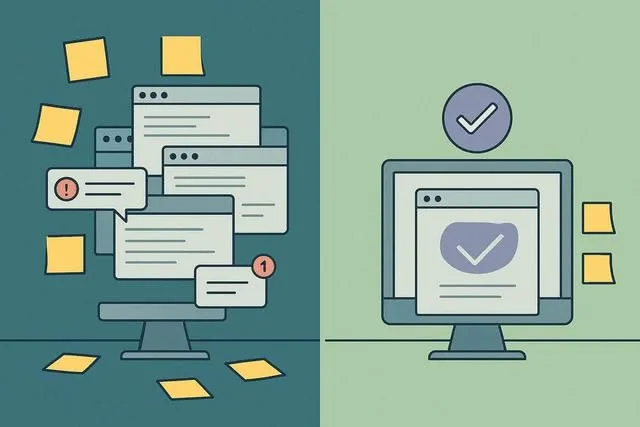
Attention Residue: Understanding the Cost of Task Switching
This is the CitePep accuracy record for “Attention Residue: Understanding the Cost of Task Switching”, published by When Notes Fly. It lists every change experts checked and accepted on that page.
Attention residue explains why switching costs more than the clock shows: part of your attention stays on the unfinished task.
What has been corrected on this page?
Every accepted correction to this page is recorded with the exact change, so readers can see how the page improved over time.
-
A claim-level statistics check of this article: 2 claims that did not match the published source were corrected to what the source reports and 1 study claim with no locatable published source was removed.
Beforefound that software developers reported only 1 to 2 hours of uninterrupted "deep work" per day, despite working 8 to 10 hour days. | The remaining hours were consumed by meetings, email, messaging, and the recovery time between these interruptions. The researchers estimated that even modest reductions in fragmentation could increase developer productivity by 20 to 30 percent. | A 2014 study published in the Scandinavian Journal of Work, Environment and Health
Afterfound that software developers' work is highly fragmented: they spread their time across a wide variety of activities and switch between them frequently. | Removed. | A 2011 study published in the Scandinavian Journal of Work, Environment and Health
Why: Each study and survey figure in the article was checked against the published source. Figures that differed from the source were corrected to the source's own numbers, dates and attribution. Claims for which no published source could be located were removed.
View the full record →
Who checked this page?
1 contributor has checked "Attention Residue: Understanding the Cost of Task Switching" on When Notes Fly. Each name below links to that person's public CitePep profile, where every contribution they have made is listed with the exact change they proposed.