
Correction Data Analytics Insights
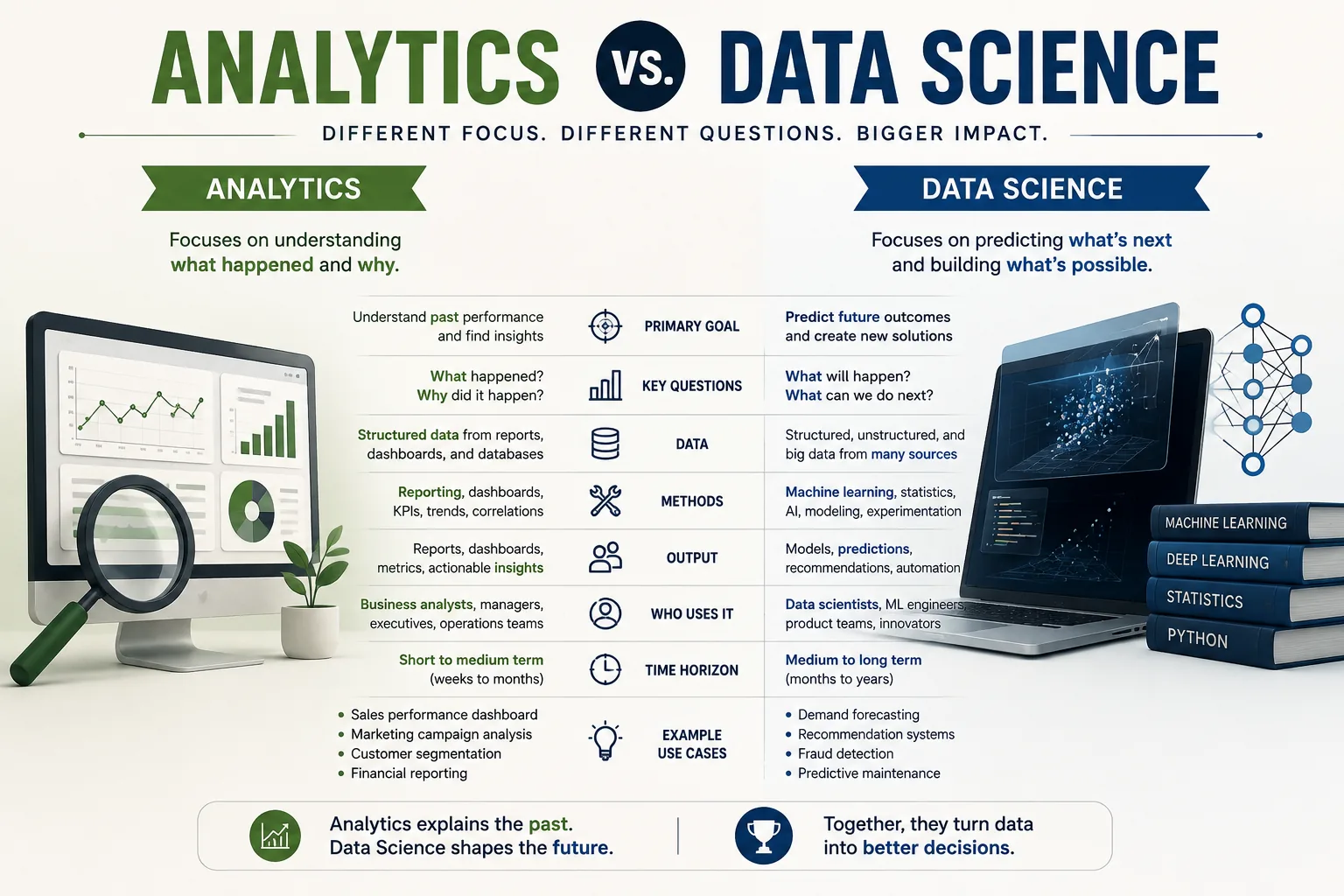
Analytics vs Data Science: Key Differences Explained
Analytics vs data science: HBR called data scientist the sexiest job in 2012, then asked in 2022 whether it still was.
Misleading wordingNeeds stronger evidence
The exact change
Before
Rather than look for individuals who had all of the skills together, companies that succeeded in developing analytics and data science capability most often put these skill sets into separate but collaborative roles. Academic research by Sinan Aral at MIT's Sloan School studied the economic returns to A/B testing programs at technology companies. In his 2020 book The Hype Machine, he brought together findings that showed companies operating mature, high-frequency A/B testing programs, which he described as the operational expression of analytics culture, had much higher revenue per user than comparable companies making product decisions by intuition. Empirical validation comes through the failure patterns of organizations that inverted the sequence. Monica Rogati's AI Hierarchy of Needs framework puts basic analytics beneath machine learning as a prerequisite and has been proven through that empirical test.
After
In his 2020 book The Hype Machine, he brought together findings that showed companies operating mature, high-frequency A/B testing programs, which he described as the operational expression of analytics culture, had much higher revenue per user than comparable companies making product decisions by intuition. Over 3 to 5 year periods, he documented particular cases at Facebook, Twitter and e-commerce platforms where hundreds of small data-informed improvements added up cumulatively into large competitive advantages. Ron Kohavi, who built experimentation programs at Amazon (where he led the Data Mining and Personalization team) and Microsoft (where he led the Analysis and Experimentation team), published extensive research on the value of online controlled experiments.[7] Insufficient clean data, an unclear problem definition and a lack of analytics infrastructure to support model development and monitoring are among the main causes, all problems that mature analytics capability would have dealt with before any investment in data science started.
Why this is better
No Sinan Aral study on returns to A/B testing programs found; the related paper is by Koning, Hasan and Chatterji (NBER w26278). Source: https://www.nber.org/papers/w26278 Follows only the unfound Aral study. Source: web search Follows only the unfound Aral study. Source: web search The figure comes from a 2019 VentureBeat article about data science projects, not a VentureBeat research study. Source: https://venturebeat.com/2019/07/19/why-do-87-of-data-science-projects-never-make-it-into-production/
Everyone who worked on this page
More by Emir Baycan in Data Analytics Insights
- Correction Best Practices for Effective Data Visualization
- Correction Analytics vs Data Science: Key Differences Explained
- Correction Best Practices for Effective Data Visualization
- Correction The Net Promoter Score (NPS): Does It Work?