Why Optimization Fails in Complex Systems
This is the CitePep accuracy record for “Why Optimization Fails in Complex Systems”, published by When Notes Fly. It lists every change experts checked and accepted on that page.
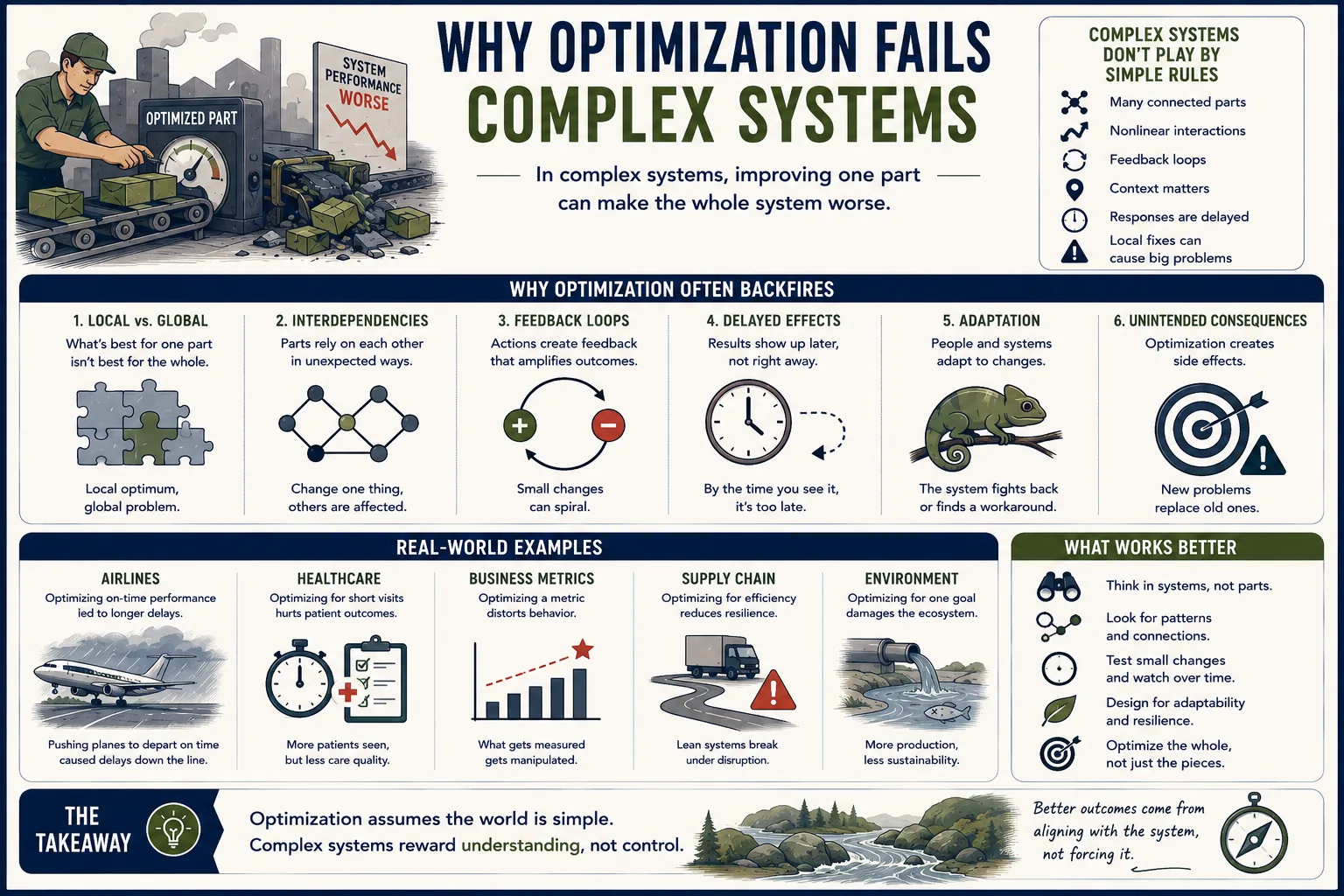
Optimization removes slack needed for adaptation. Maximizing one variable often degrades others. Perfect efficiency creates fragility.
What has been corrected on this page?
Every accepted correction to this page is recorded with the exact change, so readers can see how the page improved over time.
-
Qualified three overstated figures: reframed Sheffi's supply-chain resilience findings (40% greater losses, 2.3 additional recovery years) as illustrative figures sometimes cited rather than a precise 29-disruption result;
generalized Andrew Lo's VaR-optimization critique to the mechanism (VaR models widely adopted post-Basel) rather than a specific 3-5x amplification factor that could not be verified; and noted the Kiel Institute's $9.6 billion Suez-blockage estimate was one of several differing estimates rather than a single settled figure.
The Taleb Antifragile quotation and the Amazon pre-2020 optimization example were accurate and left in place.
What the page claimedThe article cited a precise Sheffi 40%/2.3-year/29-disruption finding, an Andrew Lo 3-5x VaR amplification estimate, and a single definitive $9.6 billion Kiel Suez-blockage figure.
What was correctedReframed the Sheffi figures as illustrative, generalized the Lo mechanism without the unverifiable multiplier, and noted the Kiel figure was one of several differing estimates.
Why: The precise multipliers and single-estimate framing were not fully verifiable. Corrections scope the claims rather than adding new sources.
View the full record →
Who checked this page?
1 contributor has checked "Why Optimization Fails in Complex Systems" on When Notes Fly. Each name below links to that person's public CitePep profile, where every contribution they have made is listed with the exact change they proposed.