
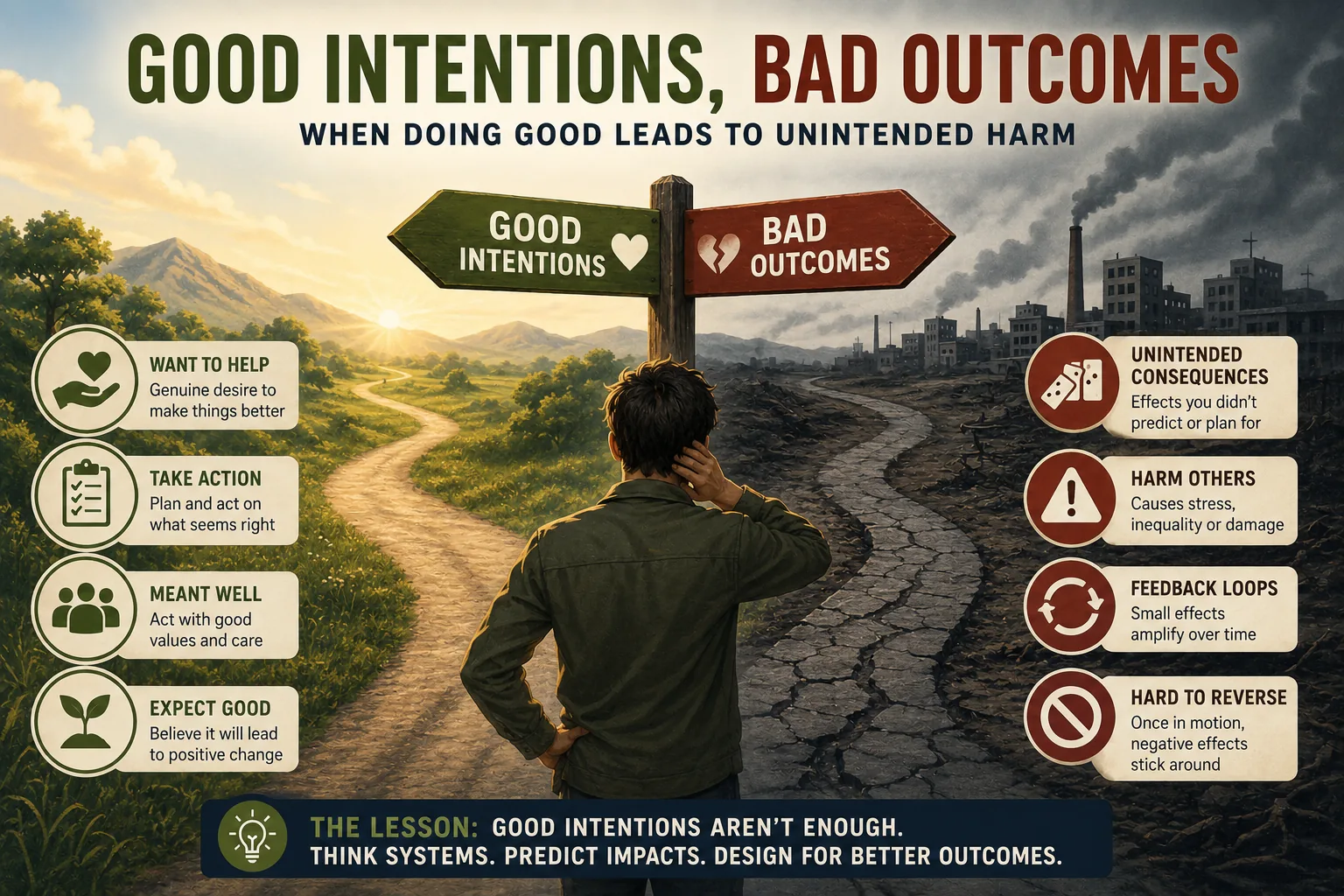
Why Good Intentions Still Lead to Bad Outcomes
This is the CitePep accuracy record for “Why Good Intentions Still Lead to Bad Outcomes”, published by When Notes Fly. It lists every change experts checked and accepted on that page.
Good intentions fail when they ignore unintended consequences, systemic effects, and how systems adapt. Wanting good outcomes doesn't guarantee them.
What has been corrected on this page?
Every accepted correction to this page is recorded with the exact change, so readers can see how the page improved over time.
-
Corrected one attribution: the precise phrasing 'when a measure becomes a target, it ceases to be a good measure' is anthropologist Marilyn Strathern's 1997 reformulation of Charles Goodhart's original, more technical 1975 statement about monetary policy indicators, not Goodhart's own words as commonly attributed. The cobra-bounty story referenced in the tracker was not present in the current version of this article.
What the page claimedThe article attributed the well-known precise phrasing of Goodhart's Law directly to Charles Goodhart as a quotation.
What was correctedAdded the correct attribution to Marilyn Strathern's 1997 reformulation, distinguishing it from Goodhart's original 1975 statement.
Why: This precise wording is commonly but incorrectly attributed directly to Goodhart; it is Strathern's later reformulation. Correction fixes the attribution rather than adding new sources.
View the full record →
Who checked this page?
1 contributor has checked "Why Good Intentions Still Lead to Bad Outcomes" on When Notes Fly. Each name below links to that person's public CitePep profile, where every contribution they have made is listed with the exact change they proposed.