Why Complex Systems Behave Unexpectedly
This is the CitePep accuracy record for “Why Complex Systems Behave Unexpectedly”, published by When Notes Fly. It lists every change experts checked and accepted on that page.
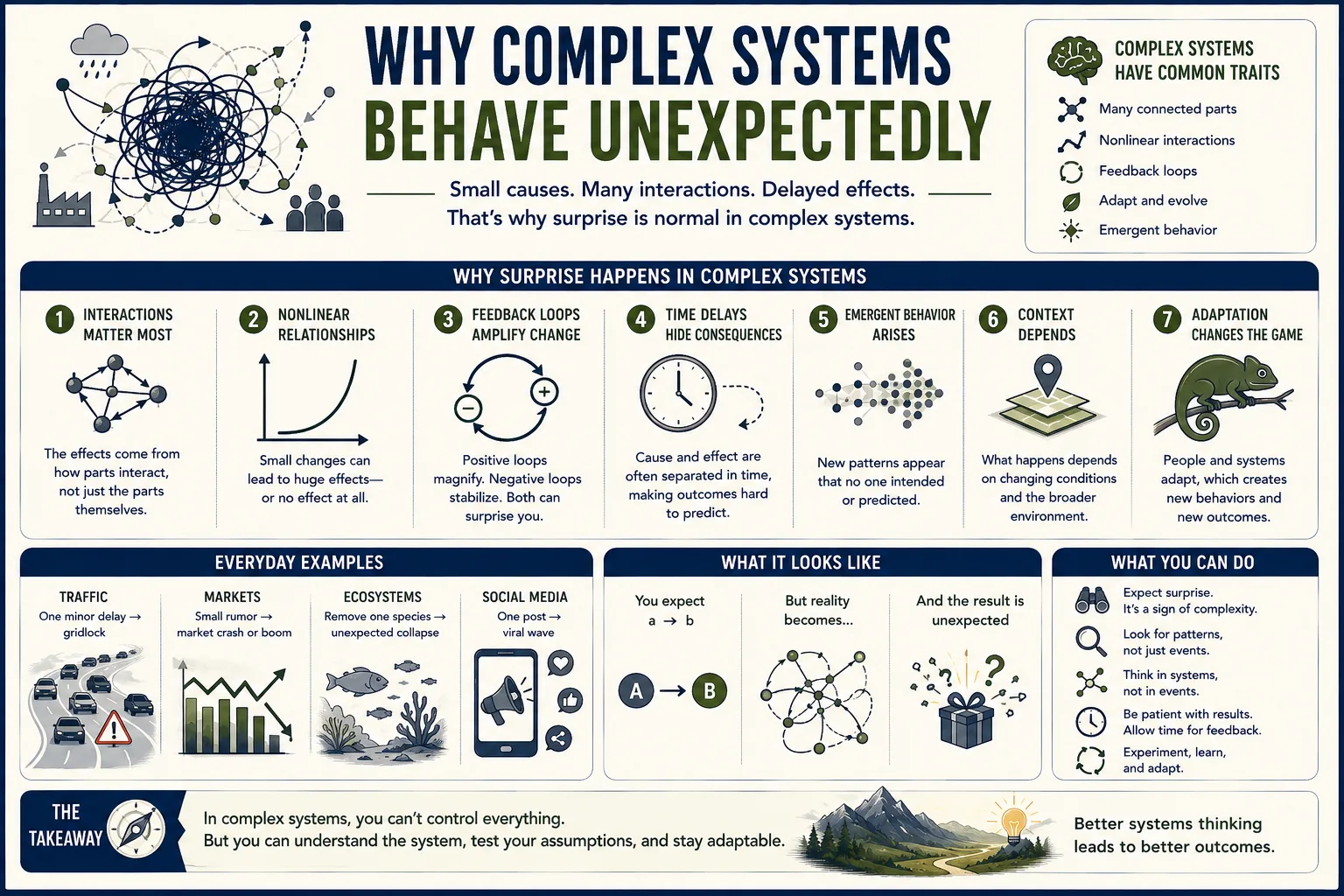
Complex systems behave unexpectedly through emergence, non-linearity where small causes create big effects, and cascading feedback loops.
What has been corrected on this page?
Every accepted correction to this page is recorded with the exact change, so readers can see how the page improved over time.
-
Qualified three overstated claims: softened 'complex systems cannot be predicted from models built on past behavior' to note they are hard to predict from normal-conditions models but not entirely unpredictable;
reframed Perrow's normal-accident theory so that Deepwater Horizon is the kind of failure the theory expects to occur eventually in complex, tightly coupled systems rather than a precise statistically-expected prediction of that specific accident;
and qualified the Deepwater Horizon 4.9-million-barrel figure as the U.S. government estimate, noting the total was debated and other estimates were lower.
The article's 2003 Northeast blackout account (already framed as multi-cause, ~55 million affected) and the Ferguson/Imperial COVID figures (510,000 UK and 2.2 million US without intervention, March 2020) were accurate and left in place.
What the page claimedThe article said complex systems cannot be predicted from past-behavior models, that Perrow's framework exactly predicts Deepwater Horizon as a statistically expected outcome, and gave a definitive 4.9-million-barrel Deepwater release; the blackout and a claimed February 2020 Imperial 250,000 US-deaths figure were also flagged.
What was correctedQualified the predictability and Perrow claims, framed the Deepwater figure as a debated government estimate, and confirmed the blackout and Ferguson figures were already accurate (March 2020; 2.2 million US, not 250,000).
Why: The flagged predictability and Deepwater claims were overstated; the blackout and Ferguson content were already correct. Corrections scope the overstated claims rather than adding new sources.
View the full record →
Who checked this page?
1 contributor has checked "Why Complex Systems Behave Unexpectedly" on When Notes Fly. Each name below links to that person's public CitePep profile, where every contribution they have made is listed with the exact change they proposed.