
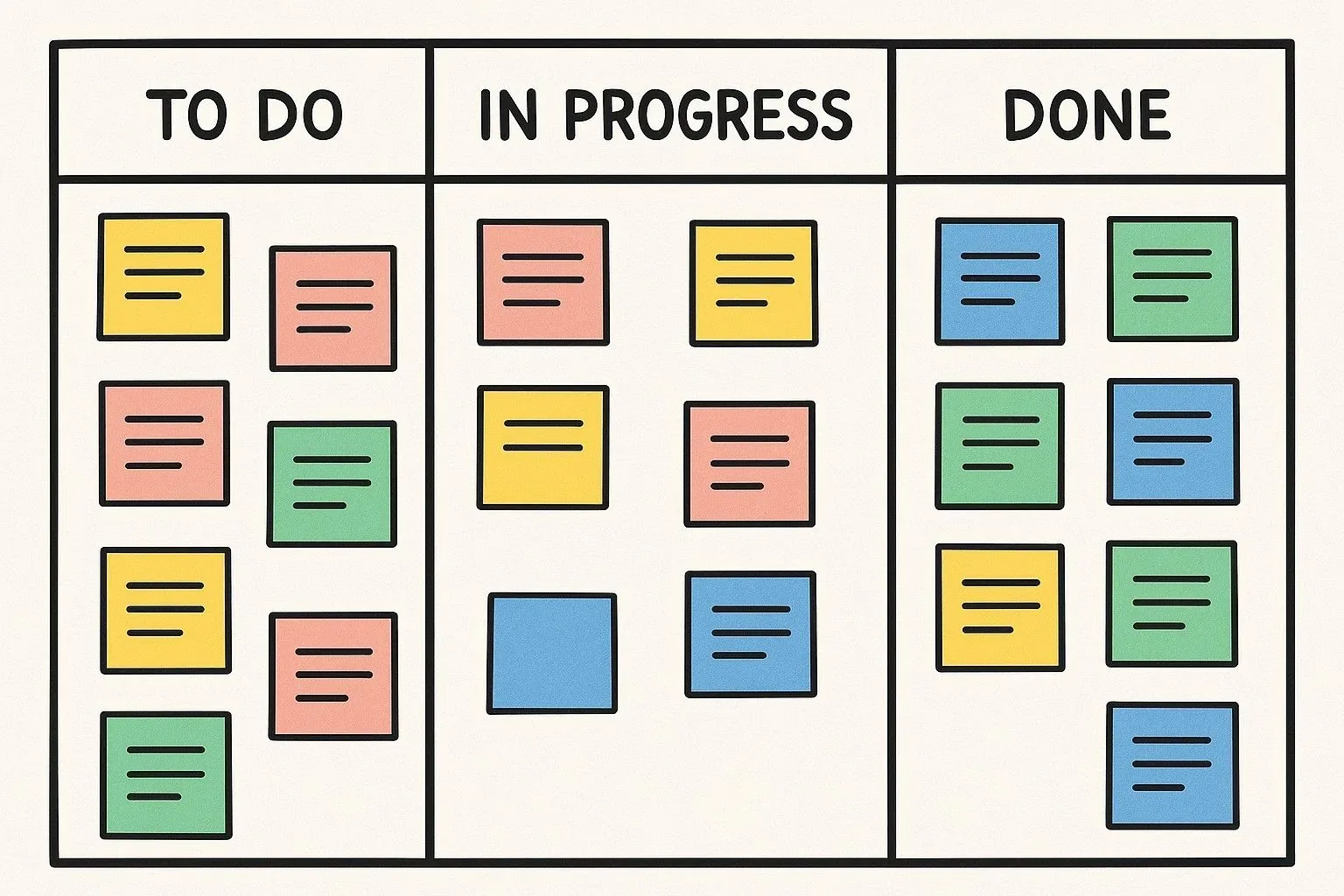
What Is Kanban: How Visual Workflow Management Works
This is the CitePep accuracy record for “What Is Kanban: How Visual Workflow Management Works”, published by When Notes Fly. It lists every change experts checked and accepted on that page.
What is kanban: flow efficiency studies suggest items spend 85 to 95 percent of their lead time waiting, not being worked on.
What has been corrected on this page?
Every accepted correction to this page is recorded with the exact change, so readers can see how the page improved over time.
-
A claim-level statistics check of this article: 3 study claims with no locatable published source were removed.
BeforeA 2021 survey of 240 agile teams by Comparative Agility found that 34 percent of teams reported using some form of hybrid approach, with Kanban elements being the most common addition to Scrum-based processes. | A 2022 survey by the Project Management Institute (PMI) found that organizations using hybrid approaches (combining elements of Kanban with structured project methods) reported higher rates of meeting original goals (72 percent) than those using purely predictive (traditional) approaches (54 percent). | The implication is that Kanban's core ideas, visual management, flow optimization, and explicit capacity limits, deliver measurable value when applied thoughtfully.
AfterRemoved. | Removed. | Removed.
Why: Each study and survey figure in the article was checked against the published source. Claims for which no published source could be located were removed.
View the full record →
Who checked this page?
1 contributor has checked "What Is Kanban: How Visual Workflow Management Works" on When Notes Fly. Each name below links to that person's public CitePep profile, where every contribution they have made is listed with the exact change they proposed.