
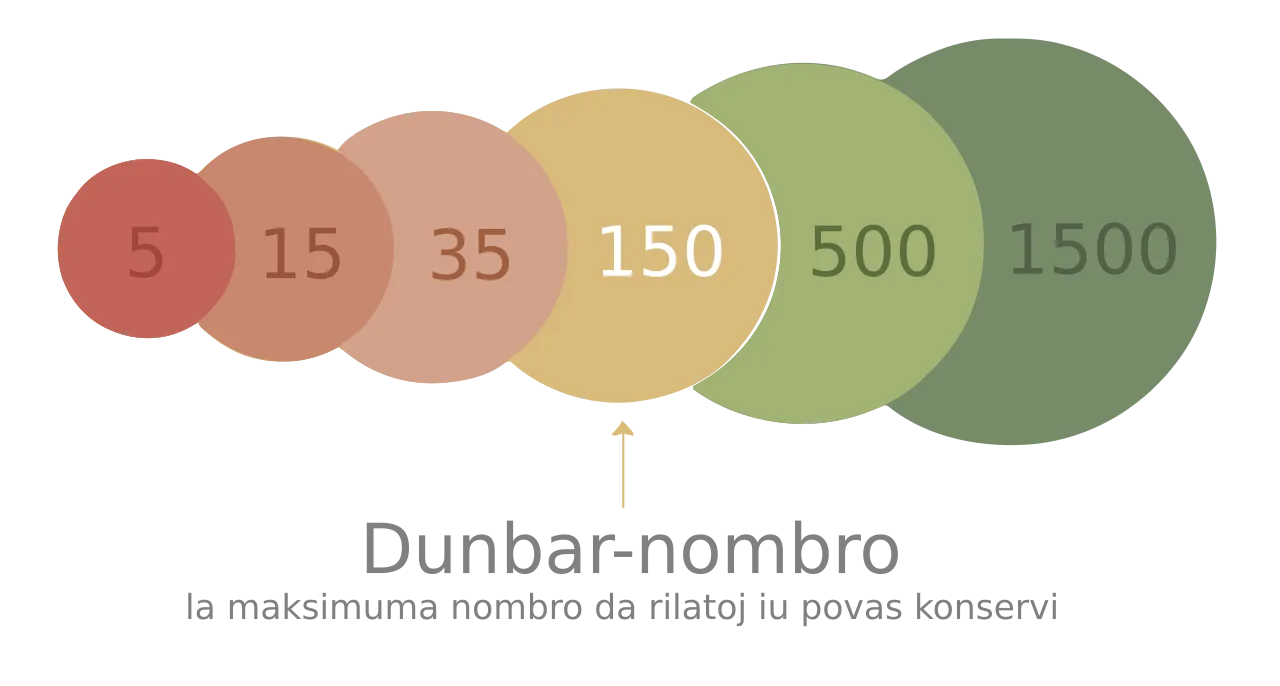
The Dunbar Number: Understanding Social Circle Limits
This is the CitePep accuracy record for “The Dunbar Number: Understanding Social Circle Limits”, published by When Notes Fly. It lists every change experts checked and accepted on that page.
Dunbar's number is contested: a 2021 reanalysis put the confidence interval from roughly 2 to over 500, leaving 150 statistically indistinguishable.
What has been corrected on this page?
Every accepted correction to this page is recorded with the exact change, so readers can see how the page improved over time.
-
A claim-level statistics check of this article: 3 claims that did not match the published source were corrected to what the source reports.
BeforeA 2016 study published in Royal Society Open Science analyzed 3.3 million Twitter users and found that the emotionally close network (the people with whom users had consistent, mutual, substantive exchanges) had a median size of approximately 100 to 200, fully consistent with the Dunbar prediction. | A 2020 study published in Proceedings of the National Academy of Sciences by Dunbar and colleagues analyzed mobile phone data from 35 million users across Europe. | People contacted their innermost circle (around 5 individuals) at rates roughly 10 times higher than their third layer (around 50 individuals). The frequency gradient matched the theoretical prediction from social circle theory remarkably well.
AfterA 2011 study published in PLoS ONE analyzed the conversations of 1.7 million Twitter users and found that users could maintain a maximum of roughly 100 to 200 stable relationships, fully consistent with the Dunbar prediction. Dunbar's own 2016 study in Royal Society Open Science, surveying more than 3,300 British adults, found average Facebook friend counts of about 155 and 183 in its two samples. | A 2016 study published in Social Networks by Pádraig Mac Carron, Kimmo Kaski, and Dunbar analyzed mobile phone call records from about 35 million users in a European country. | The call-frequency data clustered into layers averaging about 4, 11, 30, and 129 people, close to the theoretical prediction from social circle theory.
Why: Each study and survey figure in the article was checked against the published source. Figures that differed from the source were corrected to the source's own numbers, dates and attribution.
View the full record →
Who checked this page?
1 contributor has checked "The Dunbar Number: Understanding Social Circle Limits" on When Notes Fly. Each name below links to that person's public CitePep profile, where every contribution they have made is listed with the exact change they proposed.