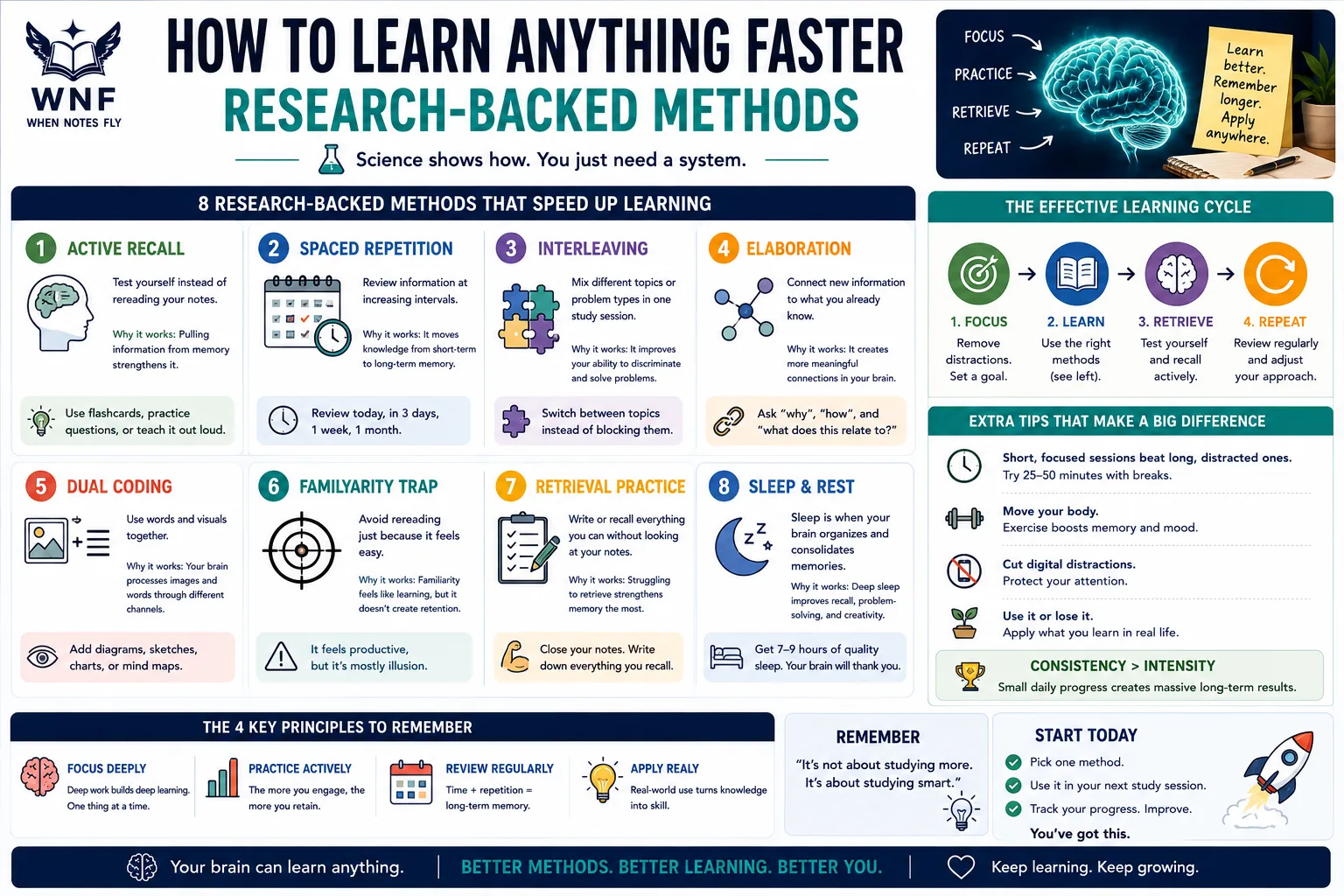
Nine Methods to Learn Anything Faster and Effectively
This is the CitePep accuracy record for “Nine Methods to Learn Anything Faster and Effectively”, published by When Notes Fly. It lists every change experts checked and accepted on that page.
Explore nine evidence-based methods for effective learning and practical study strategies to improve your skills.
What has been corrected on this page?
Every accepted correction to this page is recorded with the exact change, so readers can see how the page improved over time.
-
A review of this article on learning techniques found two direct quotations attributed to real researchers, Robert Bjork and the authors of Make It Stick, that could not be verified anywhere in their real published work, along with several statistics that did not match the real studies they were attached to.
Since inventing or misquoting statements from real people carries a distinct reputational risk beyond ordinary statistical errors, these were prioritized for correction alongside the other issues.
What the page claimedThe article attributed a specific quote to Robert Bjork from a solo-authored 2011 publication that could not be verified against the real source, which is actually a book chapter he co-authored with Elizabeth Bjork. It attributed another specific quote to the authors of Make It Stick that could not be verified anywhere in the real book. It also gave incorrect figures for several real studies: Karpicke and Roediger's 2008 retrieval-practice study, Cepeda and colleagues' 2006 spacing meta-analysis, Ericsson's violinist study on deliberate practice, Rohrer's interleaving study, Richard Mayer's multimedia learning research, and a widely repeated but unverifiable '23 minutes 15 seconds' statistic attributed to Gloria Mark's interruption research.
What was correctedThe article now correctly attributes the desirable-difficulties concept to both Robert and Elizabeth Bjork with the real chapter and book title, replaces the unverifiable Make It Stick quote with an accurate paraphrase, and corrects the specific figures for each of the studies mentioned above to match what the real research actually found, or describes the finding in accurately hedged general terms where a single precise figure could not be confirmed.
Why: Web searches for each citation found a consistent pattern: real, well-known studies whose specific reported numbers did not match what was cited, and two quotations attributed to real, named researchers that could not be sourced anywhere in their real published work.
Since the underlying research and general conclusions in this article are well established, it was rewritten to correct or remove the specific inaccuracies rather than deleting the material outright.
View the full record →
Who checked this page?
1 contributor has checked "Nine Methods to Learn Anything Faster and Effectively" on When Notes Fly. Each name below links to that person's public CitePep profile, where every contribution they have made is listed with the exact change they proposed.