
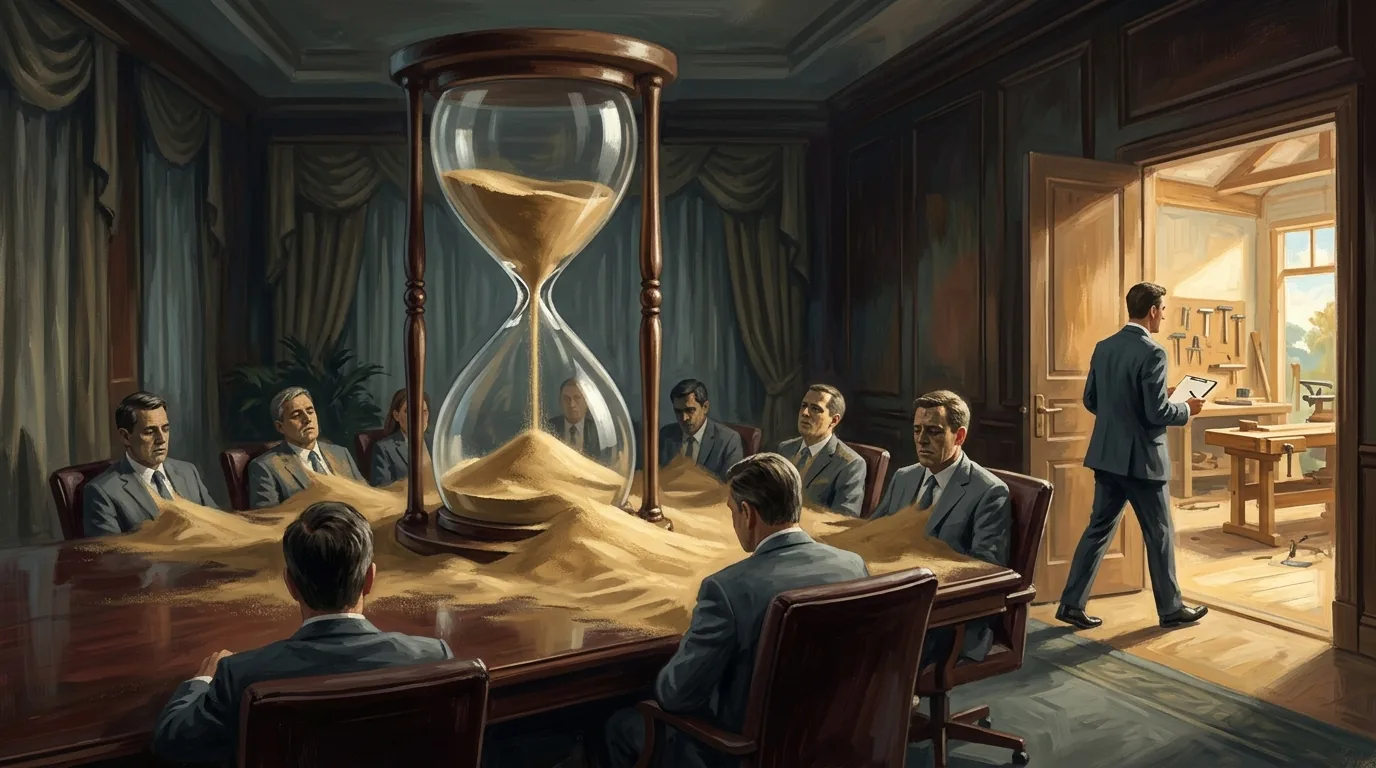
Meeting Culture Analyzed
This is the CitePep accuracy record for “Meeting Culture Analyzed”, published by When Notes Fly. It lists every change experts checked and accepted on that page.
Meeting culture: why meetings multiply, what they cost in focus and hours, and which interventions actually shrink the calendar.
What has been corrected on this page?
Every accepted correction to this page is recorded with the exact change, so readers can see how the page improved over time.
-
A claim-level statistics check of this article: 1 claim that did not match the published source was corrected to what the source reports and 4 study claims with no locatable published source were removed.
BeforeA 2019 meta-analysis in Current Directions in Psychological Science, synthesizing 117 studies on workplace meetings involving over 50,000 workers, found that meeting load was one of the strongest predictors of employee dissatisfaction and burnout - stronger than pay dissatisfaction, workload volume, or role ambiguity. | The analysis also found that meeting quality (measured by the presence of clear agendas, skilled facilitation, documented decisions, and follow-through on action items) moderated these effects dramatically: high-quality meetings of equivalent duration produced 63% lower burnout scores than low-quality meetings. | A 2017 study by Nina Vasan and colleagues at Stanford University School of Medicine, published in Academic Medicine, examined the meeting culture in academic medical centers - organizations where meeting load is notoriously high and clinician time is both expensive and scarce. | The study found that attending physicians spent an average of 12.1 hours per week in administrative meetings - 23% of their total work time - and that 73% of meeting participants surveyed described at least half the meetings they attended as "ineffective" or "not worth my time." The study also analyzed the relationship between meeting load and patient outcomes, finding that higher per-physician meeting hours were negatively correlated with patient satisfaction scores (r = ...
AfterA 2018 review in Current Directions in Psychological Science by Joseph Mroz, Joseph Allen, and colleagues, drawing on almost 200 studies of workplace meetings, found that employees average about 6 hours a week in meetings and managers about 23, and that attendees rate as many as half of all meetings as poor. | Removed. | Removed. | Removed. | Removed.
Why: Each study and survey figure in the article was checked against the published source. Figures that differed from the source were corrected to the source's own numbers, dates and attribution. Claims for which no published source could be located were removed.
View the full record →
Who checked this page?
1 contributor has checked "Meeting Culture Analyzed" on When Notes Fly. Each name below links to that person's public CitePep profile, where every contribution they have made is listed with the exact change they proposed.