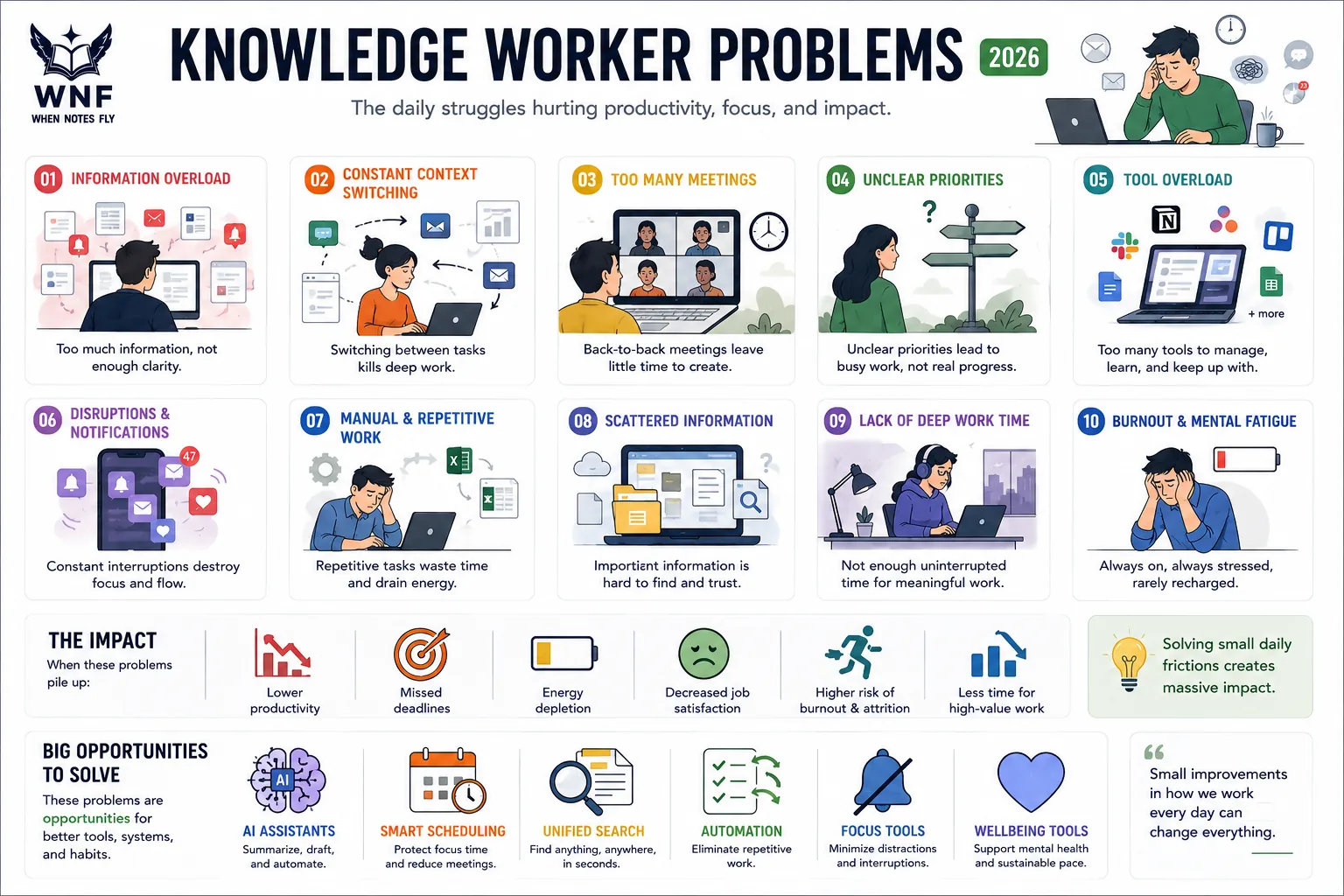
Knowledge Worker Problems in 2026
This is the CitePep accuracy record for “Knowledge Worker Problems in 2026”, published by When Notes Fly. It lists every change experts checked and accepted on that page.
Knowledge worker problems 2026: information overload filtering signal from noise, AI tool proliferation, integration complexity.
What has been corrected on this page?
Every accepted correction to this page is recorded with the exact change, so readers can see how the page improved over time.
-
A review of this article's research and case-study sections on knowledge worker problems found that while the underlying studies, reports, and corporate events it cited were almost all real, a large number of the specific statistics attributed to them did not match the real published figures, and five bibliography entries carried DOI numbers that actually belong to unrelated journal articles rather than the cited books.
What the page claimedThe article cited a real 2005 study with an inflated sample size and an incorrect task-switching statistic, attributed unlocatable percentages and a nonexistent 2011 follow-up to a real Davenport book, described a real Rogelberg meeting-research survey with one percentage off by a point and a meeting-hours figure roughly 50% too high, described the real 2023 Microsoft Work Trend Index with an inflated meeting-increase figure and two unlocatable statistics, described the real 2023 Asana Anatomy of Work report with several unlocatable burnout and automation figures, described a nonexistent 2023 Goldman Sachs study in place of the real, well-documented 2021 analyst overwork survey, and described the real January 2023 Shopify calendar reset with several figures that misstated or conflated the real reported numbers. It also listed five real books in its bibliography with DOI numbers that actually belong to unrelated journal articles from different publishers, authors, and years.
What was correctedThe article now accurately describes the 2005 fragmented-work study's real sample size and finding, generalizes the Davenport citation to his real, documented argument without the unlocatable statistics, corrects the Rogelberg-linked figures to match the real survey, corrects the Microsoft Work Trend Index figures to the report's real statistics, corrects the Asana figures to what the real report actually contains, replaces the nonexistent Goldman Sachs 2023 study with the real 2021 overwork survey and Saturday rule story, corrects the Shopify calendar reset figures to match real reporting, and removes the five mismatched DOIs from books that do not actually have those identifiers.
Why: Web searches for each cited study, report, and corporate event found that nearly all of them are real and well-documented, but a substantial number of the specific statistics attributed to them, along with several bibliography DOI numbers, did not match the real, findable sources and have been corrected or replaced with the real, verifiable figures and events.
View the full record →
Who checked this page?
1 contributor has checked "Knowledge Worker Problems in 2026" on When Notes Fly. Each name below links to that person's public CitePep profile, where every contribution they have made is listed with the exact change they proposed.