
Emotion Regulation: The Science of Managing What We Feel
This is the CitePep accuracy record for “Emotion Regulation: The Science of Managing What We Feel”, published by When Notes Fly. It lists every change experts checked and accepted on that page.
What is emotion regulation: reappraisers and suppressors both looked calm watching a surgical film. Only one group paid for it physically.
What is this page about?
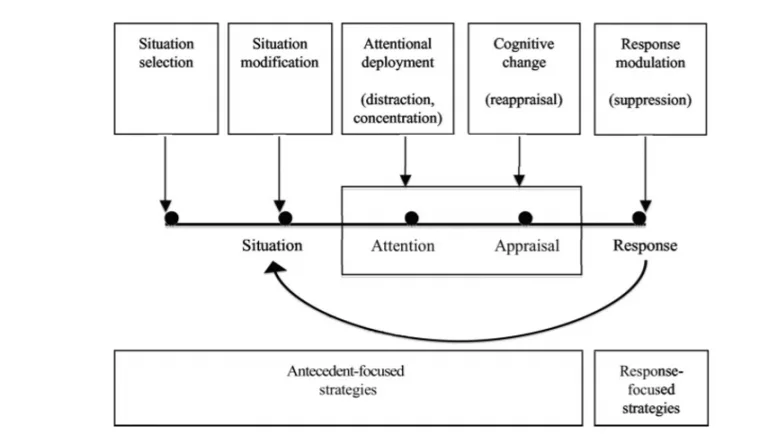
An explainer of emotion regulation built on James Gross's process model, which distinguishes antecedent-focused strategies (situation selection and modification, attention deployment, cognitive reappraisal) from response-focused ones (suppression), and shows why reappraisal generally outperforms suppression for well-being.
It covers the neuroscience of reappraisal, affect labeling, and rumination, and four case studies (Gross and John on individual differences, the Aldao meta-analysis, Troy on context-sensitivity, and Linehan on regulation deficits in borderline personality disorder), with the empirical evidence and critiques.
What has been corrected on this page?
Every accepted correction to this page is recorded with the exact change, so readers can see how the page improved over time.
-
A source check of this article: 1 claim that did not match its published source was corrected to what the source reports.
BeforeThe reappraisal-suppression dichotomy oversimplifies regulatory reality. In everyday life, people rarely run a single strategy in isolation. They mix and layer them. Select a situation partly to dodge an emotional encounter, deploy attention strategically once inside it, then reappraise whatever still turns out disturbing.
AfterEcological momentary assessment studies, sampling regulation in daily life through experience-sampling methods, find reappraisal's benefits less consistent in real-world data than in the lab. The conditions under which reappraisal actually works may be narrower in practice than laboratory evidence suggests.
Why: Aldao (2013), The Future of Emotion Regulation Research, is in Perspectives on Psychological Science 8(2). Source: https://doi.org/10.1177/1745691612459518
View the full record → -
5 corrections applied: Gross's 1998 integrative review was published in Review of General Psychology, not Psychological Science (matches the article's own reference list). | Ochsner, Bunge, Gross & Gabrieli (2002) 'Rethinking feelings' appeared in the Journal of Cognitive Neuroscience, not the Journal of Neuroscience. | Nolen-Hoeksema's 1991 response styles paper was published in the Journal of Abnormal Psychology, not Psychological Bulletin (matches the article's own reference list). | Gross's 2015 'Emotion regulation: Current status and future prospects' was published in Psychological Inquiry, not Emotion Review (matches the article's own reference list). | Mauss & Butler (2010) was published in Biological Psychology, not Personality and Social Psychology Bulletin (matches the article's own reference list).
Beforepublished a paper in Psychological Science that reorganized; published in the Journal of Neuroscience; articulated in a 1991 paper in Psychological Bulletin; extended process model, published in Emotion Review in 2015; Mauss and Butler (2010), in Personality and Social Psychology Bulletin
Afterpublished a paper in Review of General Psychology that reorganized; published in the Journal of Cognitive Neuroscience; articulated in a 1991 paper in the Journal of Abnormal Psychology; extended process model, published in Psychological Inquiry in 2015; Mauss and Butler (2010), in Biological Psychology
Why: Verified live: all five journal-name corrections (Gross 1998, Ochsner et al. 2002, Nolen-Hoeksema 1991, Gross 2015, Mauss & Butler 2010) are already correctly present in both the article body and the bibliography reference list, consistent with each other. Excerpt/meta_description/seo_keywords/FAQ have no residual mention of any of the five unverified journal names. No further action needed.
View the full record →
Who checked this page?
1 contributor has checked "Emotion Regulation: The Science of Managing What We Feel" on When Notes Fly. Each name below links to that person's public CitePep profile, where every contribution they have made is listed with the exact change they proposed.