
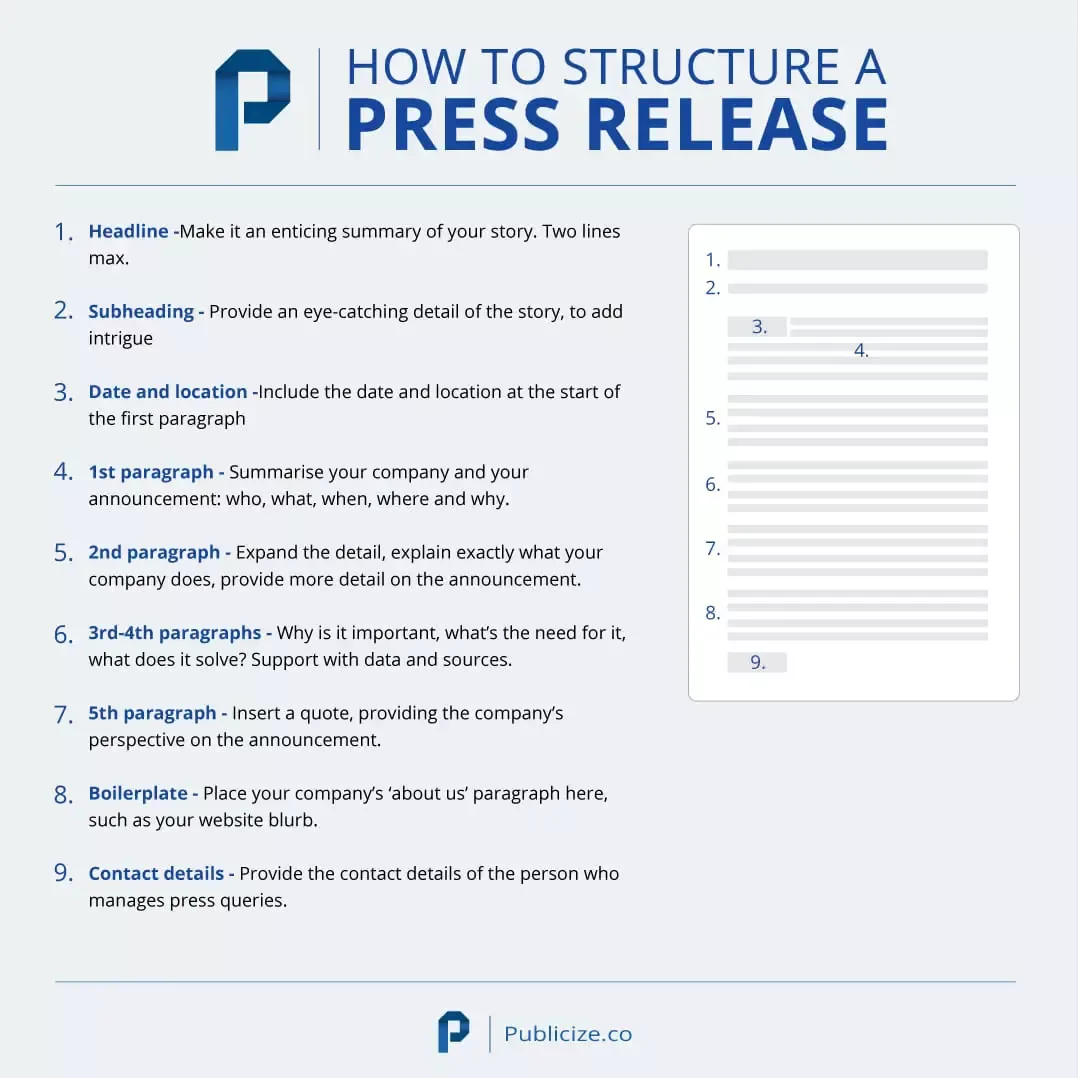
Press Release Format and Structure Explained With Examples
This is the CitePep accuracy record for “Press Release Format and Structure Explained With Examples”, published by Evolang. It lists every change experts checked and accepted on that page.
Complete guide to press release format: dateline, headline, lead, quotes, boilerplate, templates by news category, and distribution timing.
What has been corrected on this page?
Every accepted correction to this page is recorded with the exact change, so readers can see how the page improved over time.
-
Unverified direct quote attributed to Ann Handley from 'Everybody Writes' - this exact quote could not be verified in the actual book or any secondary source.; unverified direct quote attributed to Josh Bernoff from 'Writing Without Bullshit' - this exact quote could not be verified in the actual book or any secondary source.;
unverified direct quote attributed to 'Stephen Pinker' (misspelled; real name is Steven Pinker) from 'The Sense of Style' - this exact quote could not be verified.
Before<blockquote> <p>"A press release is a strange literary form. It is written for one reader who will never be thanked if the piece runs well, and who will be blamed by someone if it does not." Ann Handley, Everybody Writes</p> </blockquote> [...] <blockquote> <p>"The headline on a press release has one job: tell the reporter what the news is in enough specificity that they can decide if it fits. Everything else is self-indulgence." Josh Bernoff, Writing Without Bullshit</p> </blockquote> [...] <blockquote> <p>"The category of the release is the first clue to the reporter about how to shape the story. A release that does not signal its category forces the reporter to invent one, which most will not bother to do." Stephen Pinker, The Sense of Style</p> </blockquote>
After<p>A press release is a strange literary form in this sense: it is written for one reader (the reporter) who will never be thanked if the piece runs well, and who may be blamed internally if it does not.</p> [...] <p>The headline on a press release really has one job: tell the reporter what the news is with enough specificity that they can decide if it fits their beat. Everything else is secondary.</p> [...] <p>The category of a release is often the first clue to the reporter about how to shape the story. A release that does not clearly signal its category forces the reporter to invent one, which most will not bother to do.</p>
Why: Unverified direct quote attributed to Ann Handley from 'Everybody Writes' - this exact quote could not be verified in the actual book or any secondary source.; unverified direct quote attributed to Josh Bernoff from 'Writing Without Bullshit' - this exact quote could not be verified in the actual book or any secondary source.;
unverified direct quote attributed to 'Stephen Pinker' (misspelled; real name is Steven Pinker) from 'The Sense of Style' - this exact quote could not be verified.
View the full record →
Who checked this page?
1 contributor has checked "Press Release Format and Structure Explained With Examples" on Evolang. Each name below links to that person's public CitePep profile, where every contribution they have made is listed with the exact change they proposed.