
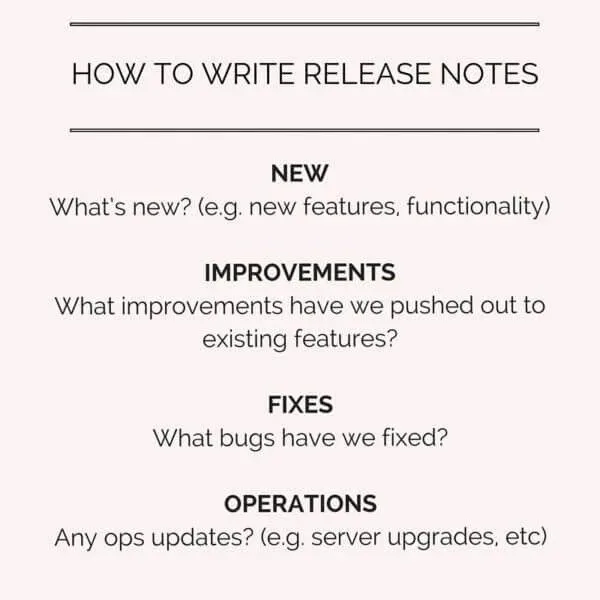
How to Write Release Notes That Users Actually Read
This is the CitePep accuracy record for “How to Write Release Notes That Users Actually Read”, published by Evolang. It lists every change experts checked and accepted on that page.
Release note templates for product, API, and developer updates with four-part framework, category discipline, and breaking-change communication patterns.
What has been corrected on this page?
Every accepted correction to this page is recorded with the exact change, so readers can see how the page improved over time.
-
Unverified quote attributed to Ann Handley's 'Everybody Writes' about release notes as a 'trust instrument.' This specific quote could not be verified in the real book via web search, and the book doe; unverified quote attributed to Steven Pinker's 'The Sense of Style' about specificity and software bugs.
This exact quote could not be verified via web search; Pinker's book is a general writing guide; unverified quote attributed to Roy Peter Clark's 'Writing Tools' about tone as a product decisio
Before<p>"Release notes are a trust instrument. Every release note either builds or erodes the trust users have in your product decisions." Ann Handley, Everybody Writes</p> [...] <p>"In writing about software, specificity is kindness. A user with a specific bug can find whether it was fixed only if you named it." Stephen Pinker, The Sense of Style</p> [...] <p>"Tone is a product decision. The release note is part of the product." Roy Peter Clark, Writing Tools</p> [...] <p>"The writing that people skip is the writing you can improve. The writing that users reference weeks later is the writing you should study." Josh Bernoff, Writing Without Bullshit</p>
After<p>Release notes function as a trust instrument: every release note either builds or erodes the trust users have in a team's product decisions.</p> [...] <p>In writing about software, specificity is a form of kindness to the reader: a user with a specific bug can find out whether it was fixed only if the release notes actually name it.</p> [...] <p>Tone is itself a product decision: the release note is part of the product experience, not separate from it.</p> [...] <p>The writing that people skip is the writing worth improving. The writing that users reference weeks later is the writing worth studying as a model.</p>
Why: Unverified quote attributed to Ann Handley's 'Everybody Writes' about release notes as a 'trust instrument.' This specific quote could not be verified in the real book via web search, and the book doe; unverified quote attributed to Steven Pinker's 'The Sense of Style' about specificity and software bugs.
This exact quote could not be verified via web search; Pinker's book is a general writing guide; unverified quote attributed to Roy Peter Clark's 'Writing Tools' about tone as a product decision.
This quote could not be verified via web search and does not match Clark's documented content, which ; unverified quote attributed to Josh Bernoff's 'Writing Without Bullshit' about writing people skip. This exact wording could not be verified via web search against the real book's documented content.
View the full record →
Who checked this page?
1 contributor has checked "How to Write Release Notes That Users Actually Read" on Evolang. Each name below links to that person's public CitePep profile, where every contribution they have made is listed with the exact change they proposed.