
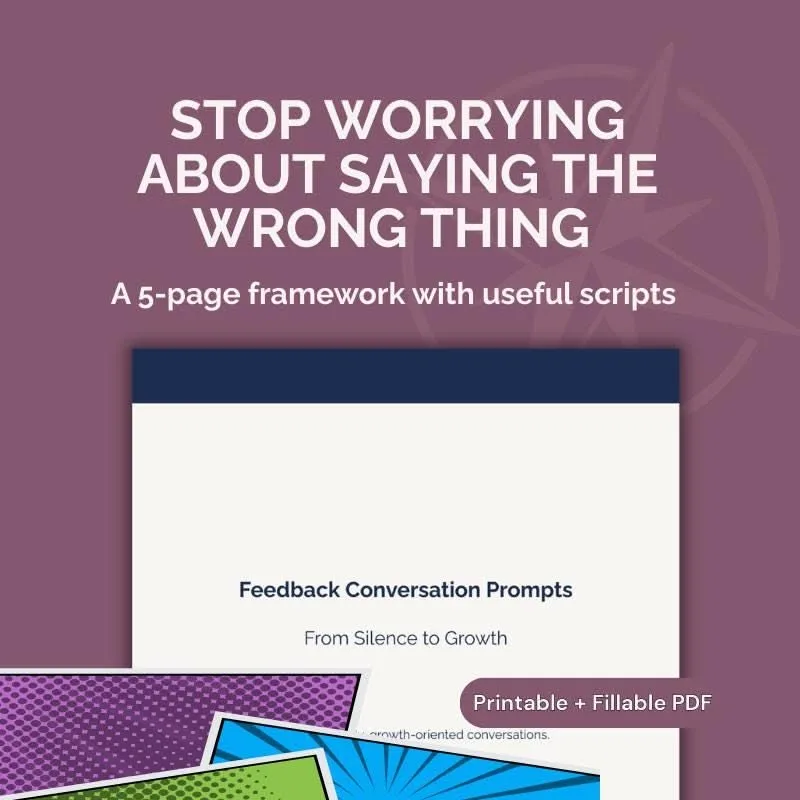
Feedback Scripts That Land Without Burning Bridges
This is the CitePep accuracy record for “Feedback Scripts That Land Without Burning Bridges”, published by Evolang. It lists every change experts checked and accepted on that page.
Curated scripts for delivering feedback effectively across various situations without damaging relationships.
What has been corrected on this page?
Every accepted correction to this page is recorded with the exact change, so readers can see how the page improved over time.
-
Unverified direct quote attributed to Sheila Heen from 'Thanks for the Feedback' - this exact quote could not be verified in the actual book or any secondary source; it follows the pattern of a real a; unverified direct quote attributed to Kim Scott from 'Radical Candor' - this exact quote could not be verified in the actual book or any secondary source.;
unverified direct quote attributed to Douglas Stone from 'Difficult Conversations' - this exact quote could not be verified in the actual book
Before<blockquote> <p>"The reason feedback fails so often is that we give people a verdict and expect it to function as a guide. Verdicts tell people who they are. Guides tell people what to do. They work differently." Sheila Heen, Thanks for the Feedback</p> </blockquote> [...] <blockquote> <p>"When you give hard feedback, tell the person what it is not as well as what it is. Not a verdict. Not a preamble to firing. Not a personal attack. Specifying what it is not is how you specify what it is." Kim Scott, Radical Candor</p> </blockquote> [...] <blockquote> <p>"The moment you are willing to say 'I might have had this wrong' is the moment your feedback becomes credible. Every feedback giver who never says that loses the trust of their best people." Douglas Stone, Difficult Conversations</p> </blockquote>
After<p>A useful way to think about it: feedback that works like a verdict tells people who they are, while feedback that works like a guide tells people what to do next. The two land very differently, and the difference is central to Stone and Heen's research in <em>Thanks for the Feedback</em>.</p> [...] <p>A useful practice when delivering hard feedback is to be explicit about what it is not: not a verdict, not a preamble to firing, not a personal attack. Naming what the conversation is not can be as clarifying as naming what it is.</p> [...] <p>Being willing to say "I might have had this wrong" is one of the strongest signals a feedback giver can send. It is a theme that runs throughout Stone, Patton, and Heen's research in <em>Difficult Conversations</em>: credibility depends on a willingness to update.</p>
Why: Unverified direct quote attributed to Sheila Heen from 'Thanks for the Feedback' - this exact quote could not be verified in the actual book or any secondary source; it follows the pattern of a real a; unverified direct quote attributed to Kim Scott from 'Radical Candor' - this exact quote could not be verified in the actual book or any secondary source.;
unverified direct quote attributed to Douglas Stone from 'Difficult Conversations' - this exact quote could not be verified in the actual book or any secondary source.
View the full record →
Who checked this page?
1 contributor has checked "Feedback Scripts That Land Without Burning Bridges" on Evolang. Each name below links to that person's public CitePep profile, where every contribution they have made is listed with the exact change they proposed.