
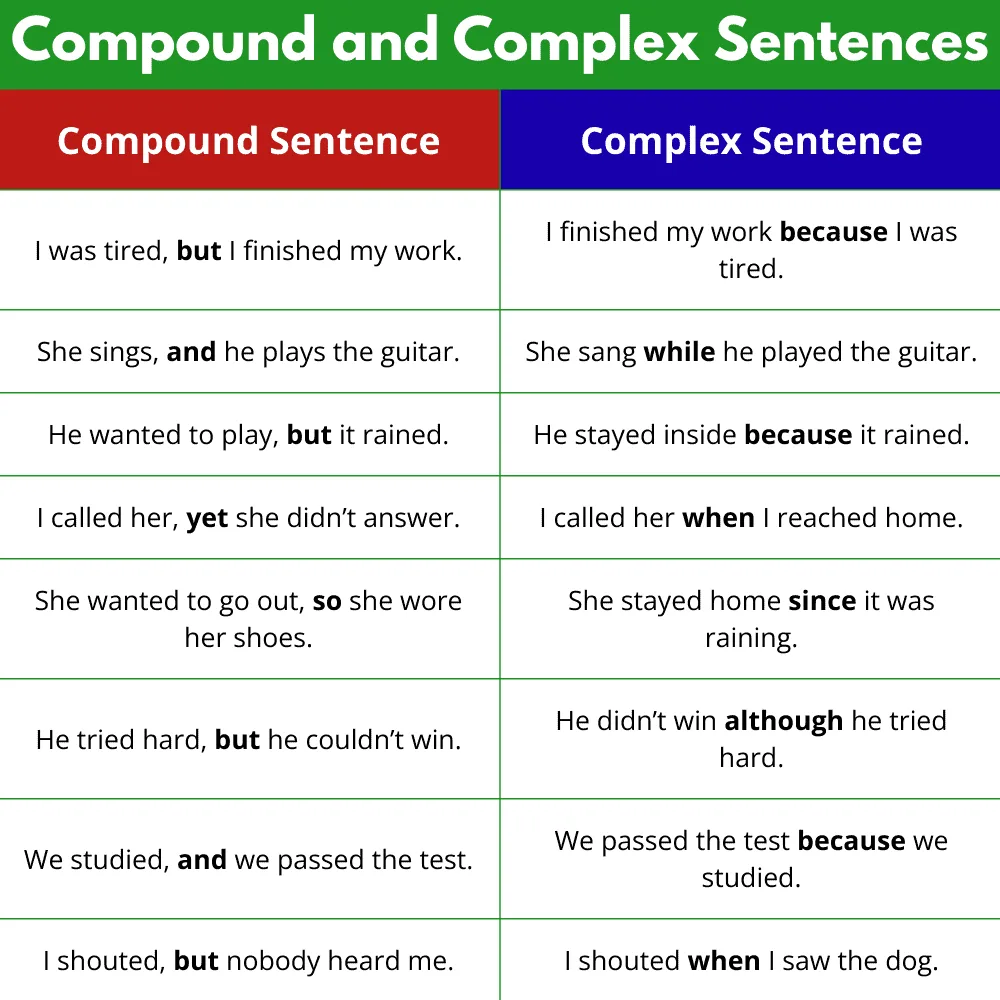
Complex vs Compound Sentences Explained
This is the CitePep accuracy record for “Complex vs Compound Sentences Explained”, published by Evolang. It lists every change experts checked and accepted on that page.
The difference between compound and complex sentences explained with examples, punctuation rules, and when to use each for clearer, stronger writing.
What has been corrected on this page?
Every accepted correction to this page is recorded with the exact change, so readers can see how the page improved over time.
-
Unverified quote attributed to Francis-Noel Thomas and Mark Turner. This exact quote could not be verified in Clear and Simple as the Truth or any other indexed source.; unverified quote attributed to Joseph Williams. This exact quote could not be verified in Style: Lessons in Clarity and Grace or any other indexed source.; unverified quote attributed to Verlyn Klinkenborg.
This exact quote could not be verified in Several Short Sentences About Writing or any other indexed source.
Before<blockquote> <p>"The difference between a sentence and a fragment is not length. It is whether the thought closes. A single short sentence can close a thought. A long string of subordinate clauses can leave the reader still waiting." Francis-Noel Thomas and Mark Turner, Clear and Simple as the Truth</p> </blockquote> [...] <blockquote> <p>"Every sentence is a hierarchy of importance. The writer who knows which clause to make dependent is the writer who controls what the reader notices. Subordination is not decoration. It is design." Joseph Williams, Style: Lessons in Clarity and Grace</p> </blockquote> [...] <blockquote> <p>"The rhythm of prose is the music of reading. Short sentences wake the reader. Long sentences carry her forward. Variety is the gift the writer gives the reader so that the reading never feels like climbing stairs of identical height." Verlyn Klinkenborg, Several Short Sentences About Writing</p> </blockquote>
After<blockquote> <p>Style scholars such as Francis-Noel Thomas and Mark Turner, authors of Clear and Simple as the Truth, emphasize that what separates a sentence from a fragment is not length but whether the thought actually closes.</p> </blockquote> [...] <blockquote> <p>Joseph Williams's Style: Lessons in Clarity and Grace treats subordination as a design choice rather than decoration, arguing that the writer who decides which clause to make dependent is effectively controlling what the reader notices.</p> </blockquote> [...] <blockquote> <p>Writers on style such as Verlyn Klinkenborg, author of Several Short Sentences About Writing, emphasize that varying sentence length and structure gives prose a rhythm, so that reading does not feel like climbing stairs of identical height.</p> </blockquote>
Why: Unverified quote attributed to Francis-Noel Thomas and Mark Turner. This exact quote could not be verified in Clear and Simple as the Truth or any other indexed source.; unverified quote attributed to Joseph Williams. This exact quote could not be verified in Style: Lessons in Clarity and Grace or any other indexed source.; unverified quote attributed to Verlyn Klinkenborg.
This exact quote could not be verified in Several Short Sentences About Writing or any other indexed source.
View the full record →
Who checked this page?
1 contributor has checked "Complex vs Compound Sentences Explained" on Evolang. Each name below links to that person's public CitePep profile, where every contribution they have made is listed with the exact change they proposed.