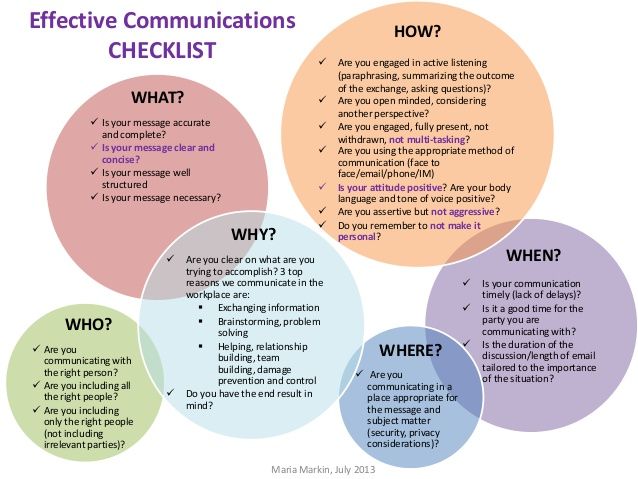
Communication Clarity Checklist
Use this communication clarity checklist to put your main point upfront, define jargon, add concrete examples, and confirm audience understanding.
What was corrected
Article relabeled real Economist Intelligence Unit survey categories (swapping which percentage applied to which outcome) and added an unverified '2.4 million' cost figure with no real source. It described Kristin Byron's real 2008 Academy of Management Review paper as an empirical 'comprehensive review' with a '50 percent' finding, when it is actually a theoretical model paper with no such statistic. It misdated Robin Dunbar's real 1997 Human Nature paper as 1998 and added an unverified 'across 38 different cultures' detail to a study that was actually based on eavesdropping in English-speaking public spaces. It reversed the author order of Kruger, Epley, Parker & Ng's real 2005 study and incorrectly stated both lead authors were at the University of Chicago (Kruger was at NYU Stern). It misdated Haig, Sutton & Whittington's real SBAR paper from 2006 to 2010 and added an unverifiable '67 percent' statistic. It included an unverified Kaiser Permanente adoption details (37 hospitals in 2004, specific callback/error-rate figures) that don't match the real history of SBAR's development within Kaiser Permanente Colorado. It included an unverified entire Lockheed Martin F-35 case study with unverified GAO-attributed figures that don't appear in any real GAO report. And it attributed an unverified '34 percent fewer follow-up meetings' statistic to a nonexistent 2019 Tom Eisenmann Harvard Business Review article about Amazon's real narrative-memo practice.
EIU passage corrected to accurately reflect the real survey's category labels without the unverified cost figure. Byron passage corrected to accurately describe her paper as a theoretical model, not an empirical review with an unverified statistic. Dunbar passage corrected to the real 1997 year and the real observational methodology. Epley/Kruger passage corrected to the real author order and removed the incorrect shared-affiliation claim. Haig et al. passage corrected to the real 2006 year without the unverifiable statistic. Kaiser Permanente passage rewritten to describe the real history of SBAR's development within Kaiser Permanente Colorado rather than unverified adoption figures. The entire unverified Lockheed Martin/GAO case study was removed. The Amazon/Eisenmann unverified statistic was replaced with an accurate general statement about the real narrative-memo practice's purpose.
Why this is better
This was one of the most heavily unverified tail sections found in this batch - 8 of 10 checked claims needed correction, ranging from wrong years and author ordering on otherwise-real papers to two entirely unverified case studies (Lockheed Martin/GAO, Amazon/Eisenmann) and one set of unverified adoption statistics grafted onto a real institution's real practice (Kaiser Permanente/SBAR). By contrast, the Joint Commission's 80% communication-failure statistic, the Alan Mulally/Ford anecdote, and Gawande's real 36%/47% surgical checklist figures (spot-checked separately) were all verified fully accurate.
Everyone who worked on this page
More by Selen Ikbal Uslu in Workplace Communication
- Correction Giving Feedback Effectively
- Correction Writing Clearly at Work
- Correction The Benefits of Asynchronous Communication