Correction Systems Thinking
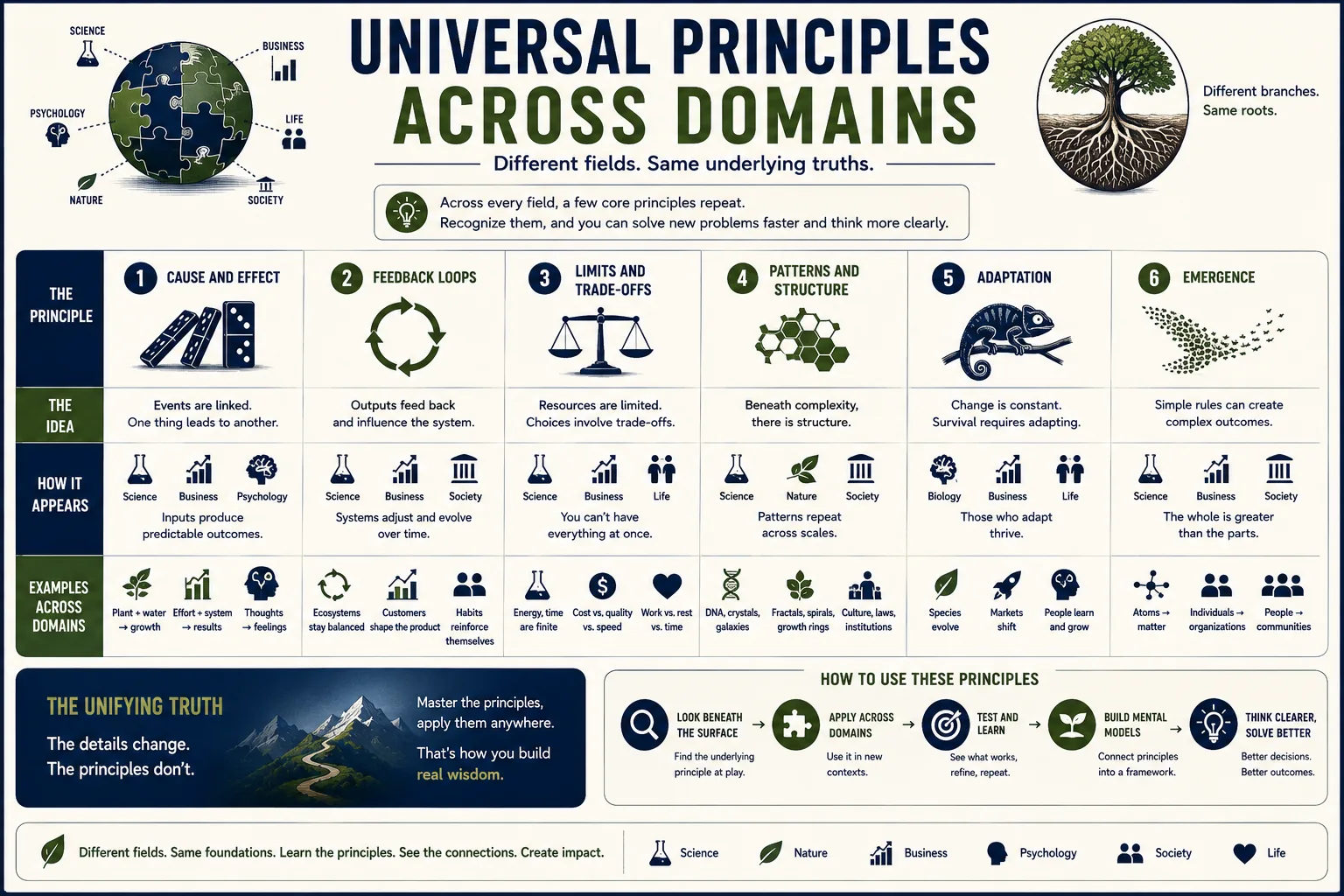
Universal Principles That Apply Across Domains
Pareto principle: 80% of effects come from 20% of causes. Leverage finds high-impact points.
Factually incorrectMissing context
What was corrected
What the page claimed
Article stated physicist Per Bak was at the Niels Bohr Institute when he published the 1987 self-organized criticality paper, when he was actually at Brookhaven National Laboratory at that time (he moved to the Niels Bohr Institute later in his career). It also stated as settled fact that Didier Sornette's log-periodic power law model 'successfully identified the approximate timing' of the 2000 dot-com crash and 2006 housing peak in advance, without noting that this claim is genuinely disputed within economics and econophysics - critics argue the apparent successes rely on cherry-picked cases and after-the-fact parameter adjustment rather than rigorous advance prediction.
What was corrected
Bak's affiliation corrected to Brookhaven National Laboratory for the 1987 paper, noting his later move to the Niels Bohr Institute. The Sornette passage rewritten to accurately describe his claims as claims, while noting the real, ongoing scientific controversy over whether the method genuinely predicts crashes in advance or relies on cherry-picked hindsight.
Why this is better
Independent verification found this was the cleanest article checked in this entire batch - 4 of 6 major citations (Geoffrey West's scaling laws, Adamic/Huberman/Zipf/Gibrat power-law work, Marten Scheffer's lake ecosystem research, and Robert Axelrod's prisoner's dilemma tournaments) were all fully accurate with correct figures, dates, and attributions.
More by Emir Baycan in Systems Thinking
- Correction What Is Systems Thinking? A Beginner's Guide
- Correction Mapping Complex Systems: A Practical Guide
- Correction How Feedback Loops Work