
Correction Learning Science Knowledge
Think Critically: Science and Practical Steps for Reasoning
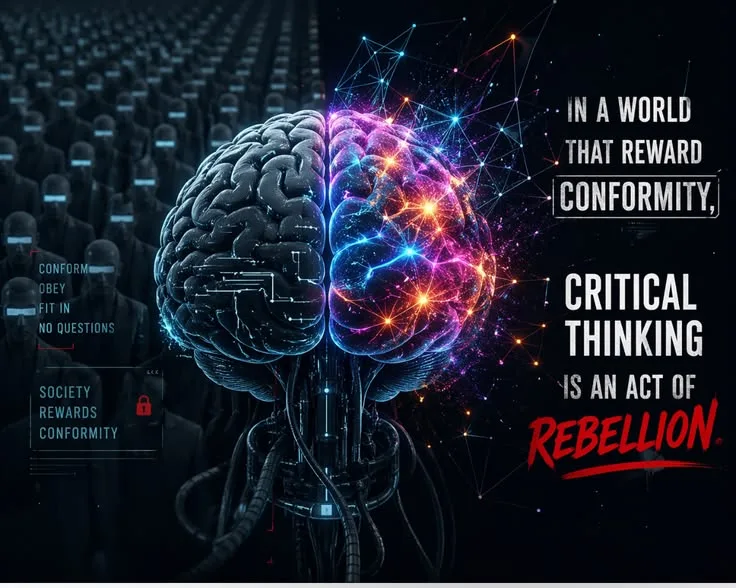
Critical thinking: in Asch's line task about 75 percent of participants went along with an obviously wrong answer at least once.
Factually incorrect
The exact change
Before
A person who cannot identify a well-constructed argument cannot recognize that their own arguments are poorly constructed.
After
The practical takeaway stands: incompetence tends to produce false confidence, and the people most certain they are right in domains where they have limited knowledge should be treated with more skepticism, including when the person is yourself.
Why this is better
Gignac and Zajenkowski (2020, Intelligence 80) title the effect "(mostly) a statistical artefact" attributed to the better-than-average effect and regression to the mean. Source: https://doi.org/10.1016/j.intell.2020.101449
More by Emir Baycan in Learning Science Knowledge
- Correction Spaced Repetition: The Most Efficient Way to Learn Anything
- Correction Cobra Effect in Education: When Incentives Backfire
- Correction Tacit Knowledge: Understanding Unwritten Expertise
- Correction How to Learn a New Skill as an Adult