
Correction Systems Complexity
Network Science: Understanding Connections and Patterns
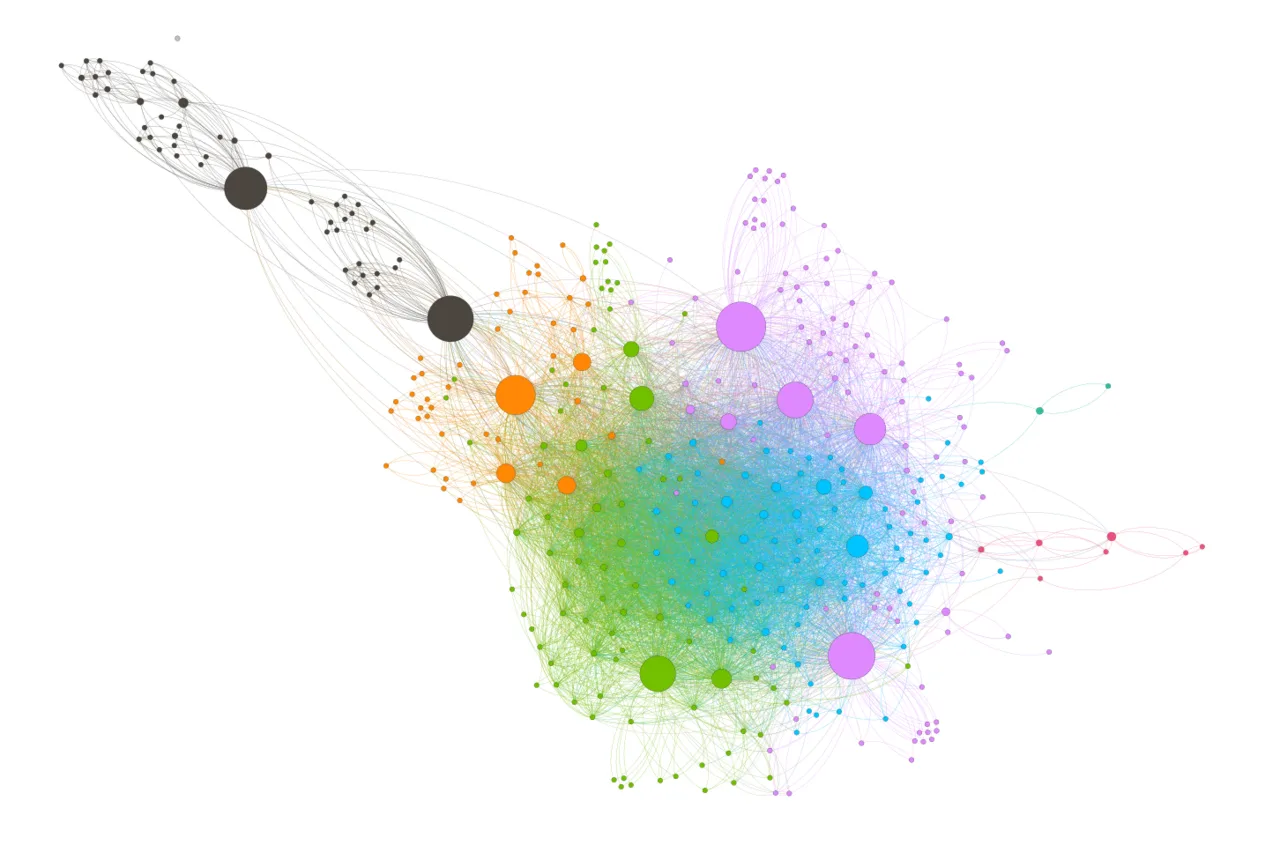
Network science found one property that explains a lot, hub-heavy networks are robust to random failure and fragile to targeted attack.
Factually incorrect
The exact change
Before
A 2022 study by Rajiv Sethi and colleagues, analyzing hundreds of millions of weak-tie formation events on LinkedIn, provided the largest-ever naturalistic test of the hypothesis and confirmed that weak ties across different industries and communities significantly predicted job transitions.
After
A 2022 study by Karthik Rajkumar and colleagues, analyzing randomized experiments covering 20 million LinkedIn users, provided the largest-ever causal test of the hypothesis and confirmed that moderately weak ties were the most useful for moving to a new job.
Suggested change
Corrected 1 figure to the published source.
Why this is better
Each study and survey figure in the article was checked against the published source. Figures that differed from the source were corrected to the source's own numbers, dates and attribution.
More by Emir Baycan in Systems Complexity
- Correction What Is the Circular Economy and How It Works
- Correction The Broken Windows Theory: Understanding Urban Policy
- Correction Why Fixes Often Backfire