
Correction Psychology Behavior
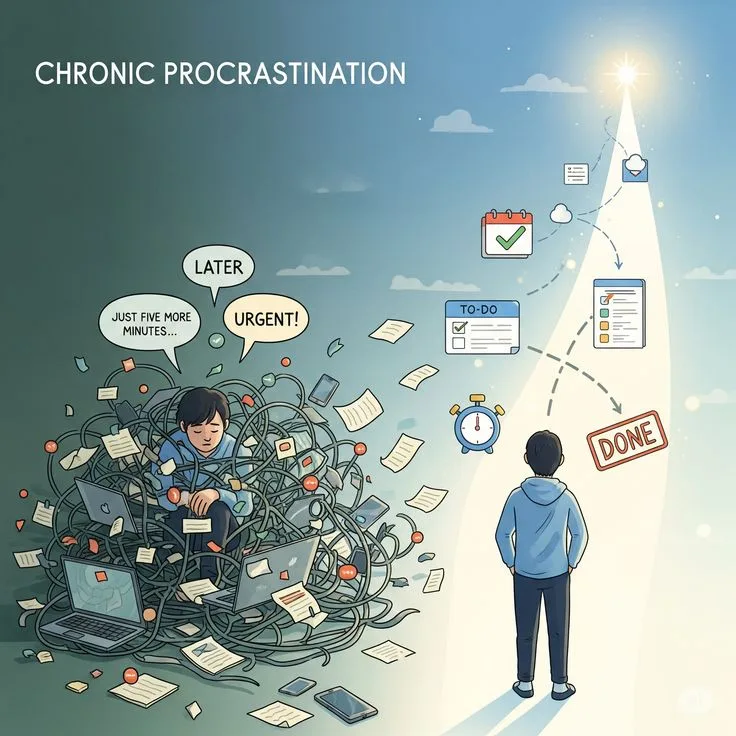
Chronic Procrastination in Highly Motivated People
Why do we procrastinate: lazy people do not feel the grinding guilt, which is the clue that this is not laziness.
Factually incorrectNeeds stronger evidence
The exact change
Before
A 2014 neuroimaging study by Schluter and colleagues found that chronic procrastinators had a significantly larger amygdala than non-procrastinators, and showed weaker functional connectivity between the amygdala and the dorsal anterior cingulate cortex (dACC) | Schluter, R. S., et al. (2014). Functional brain connectivity associated with procrastination and its relation to self-regulation and emotional control. Neuropsychologia, 64, 111-121. | The effect persisted at four-week follow-up.
After
A 2018 neuroimaging study by Schluter and colleagues found that chronic procrastinators had a significantly larger amygdala than non-procrastinators, and showed weaker functional connectivity between the amygdala and the dorsal anterior cingulate cortex (dACC) | Schlüter, C., et al. (2018). The structural and functional signature of action control. Psychological Science, 29(10), 1620-1630. | Removed.
Suggested change
Corrected 2 figures to the published source. Removed 1 unsourced claim.
Why this is better
Each study and survey figure in the article was checked against the published source. Figures that differed from the source were corrected to the source's own numbers, dates and attribution. Claims for which no published source could be located were removed.
More by Emir Baycan in Psychology Behavior
- Correction The Evolutionary Purpose of Emotions Explained
- Correction Why Mental Health Rates Are Changing
- Correction Insights on Great Leadership from 50 Years of Research
- Correction Why Self-Compassion Surpasses Self-Esteem