
Correction Statistics And Data Analysis
Causation vs Correlation: Key Distinctions
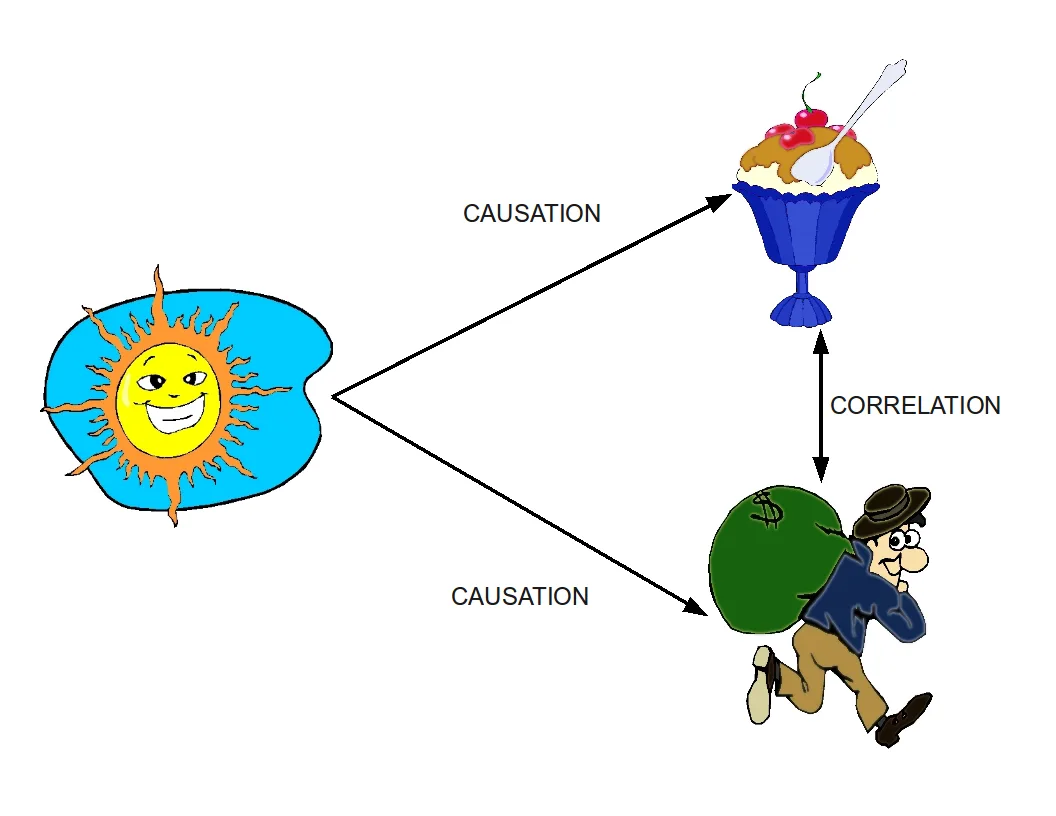
Correlation means variables change together with predictable patterns. Causation means one variable directly causes changes in another variable.
Factually incorrectNeeds stronger evidence
What was corrected
What the page claimed
Article inflated the Framingham Heart Study's real publication count from the widely-reported 'over 3,000' peer-reviewed papers to an unverified 'over 4,000.' It described a specific 2019 Airbnb pricing-methodology publication and price-nudge experiment that could not be verified anywhere - no such publication exists in Airbnb's real public causal-inference work, which is dated 2016 and 2022 and describes different methods. It also understated the real Gordon/Zettelmeyer/Bhargava/Chapsky Facebook ad-measurement study's finding, describing observational ad-effectiveness estimates as overstated 'by an average of two to three times' when the real finding is a factor of three or more.
What was corrected
Framingham publication count corrected to the real, widely-cited 'over 3,000.' The unverified Airbnb case study was replaced with an accurate general description of the same real confounding problem (price correlating with demand in marketplace pricing) without inventing a specific unverifiable Airbnb publication or experiment. The Facebook ad-attribution figure corrected to 'a factor of three or more,' matching the real study's actual finding.
Why this is better
This article was substantially cleaner than others in this batch - independent verification found 3 of 6 major citations (Angrist's 1990 draft lottery paper, the Nurses' Health Study/Women's Health Initiative HRT reversal, and the Walmart Pop-Tarts anecdote) were fully accurate with correct figures, and only one citation (Airbnb) was outright unverified rather than merely imprecise.