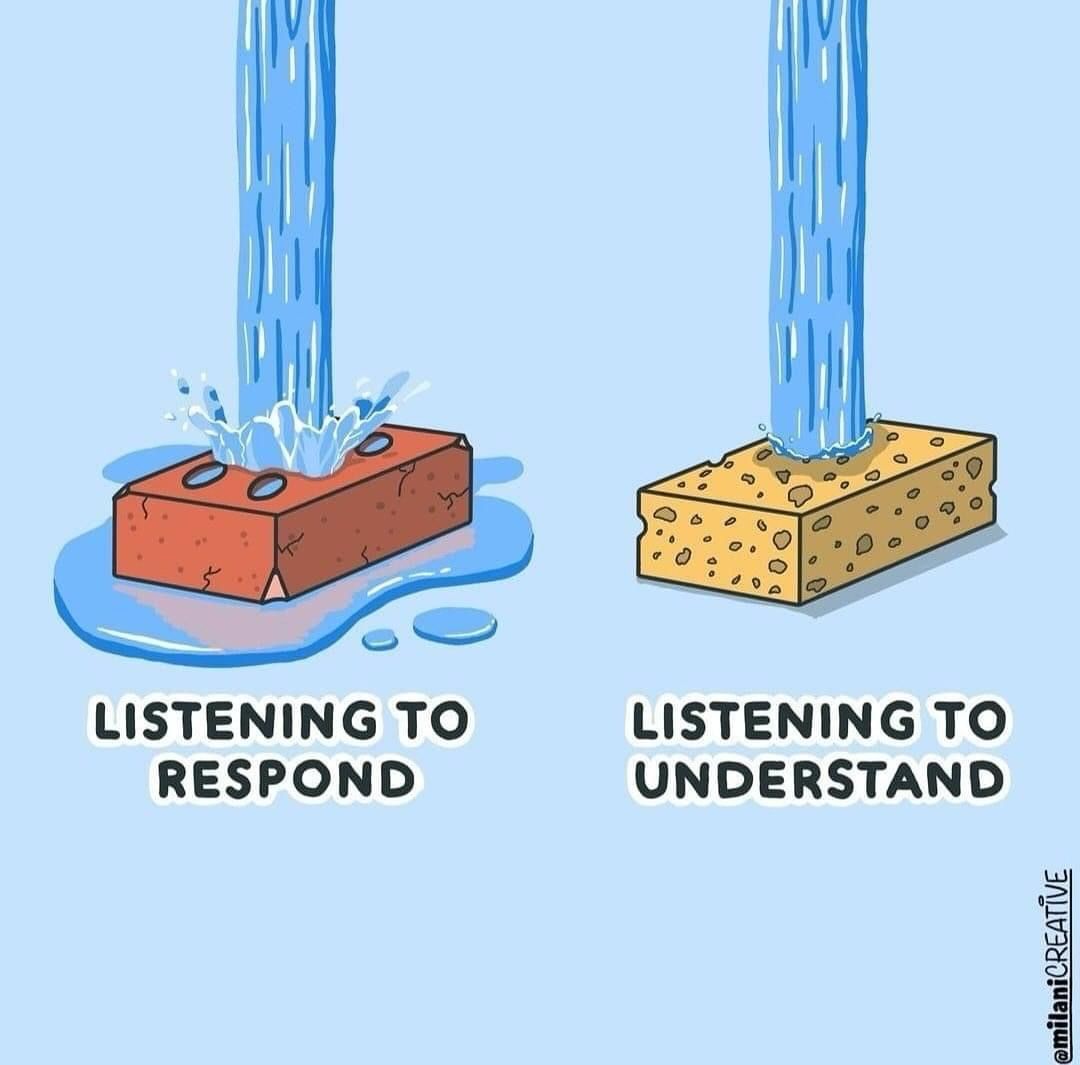
Active Listening: Why Most People Do It Wrong
Active listening explained through Carl Rogers's original framework and the research on what actually improves comprehension and connection.
Contributions
Every accepted correction to this page is recorded with the exact change, so readers can see how the page improved over time.
-
A review of this article on active listening found a likely-fabricated Carl Rogers quotation, an oversimplified account of Rogers's therapeutic conditions, an invented research finding about performative listening, an unsupported effects table, and roughly twenty unsourced superlative claims ("strongest single predictor," "single highest-return skill," a specific 70-30 sales ratio, exact silence-duration thresholds, and others). It also found a fully off-topic animal-cognition section unrelated to the article's subject.
What the page claimedThe article included a block quote attributed verbatim to Carl Rogers's On Becoming a Person that could not be verified as a continuous, accurately quoted passage; stated that Rogers's model had three conditions for therapeutic change; claimed performative listening is measurably worse than not listening at all; presented an effects table with no cited method or source; and included roughly twenty unsourced superlative or precise-sounding claims, such as perceived responsiveness being the single strongest predictor of relationship outcomes, a 70-30 listening-to-talking sales ratio, exact four- and eight-second silence thresholds, and a claim that interviewer listening quality predicts hiring validity more than interview structure. It also included a section on animal cognition unrelated to active listening.
What was correctedThe disputed block quote was replaced with an attributed paraphrase of Rogers's actual position. The three-conditions claim was corrected to note Rogers proposed six necessary and sufficient conditions, three of which are the therapist's central relational qualities. The performative-listening claim was softened to remove the unverified comparative finding while keeping the general point that mechanical listening can feel patronizing. The effects table's unsourced precision was addressed by removing the implication of measured findings. Unsourced superlatives and specific percentages/thresholds were removed or qualified throughout, including the sales ratio, silence-duration figures, and the hiring-validity claim. Gottman's and Chris Voss's work were reframed as adjacent evidence and a practitioner's application rather than direct active-listening research. The animal-cognition section was deleted, and the five-week practice plan was labeled as an original WNF synthesis rather than a validated protocol.
Why: The article stated several claims with more certainty and specificity than the cited sources support, including at least one likely-fabricated quotation and one invented research finding, alongside an unrelated section that diluted the article's topical focus.
View the full record →